Flow
"Silence is the only language left to speak."

The first thing you notice about the protagonist of Flow isn’t his fur or his plight, but his absolute, stubborn refusal to be anything other than a cat. In an era where every animated animal is contractually obligated to have the snarky voice of a Hollywood A-lister and a penchant for pop-culture references, Gints Zilbalodis gives us a hero who hisses, hides, and looks at the world with that specific brand of feline suspicion we all recognize. There are no quips here. There is no dialogue at all. Instead, we get a breathtakingly pure cinematic experience that feels like a silent film sent back to us from a future where humanity finally decided to exit stage left.

I watched this while my neighbor was power-washing their driveway, and strangely, the muffled drone of high-pressure water against concrete only intensified the experience. It felt like the world outside my window was beginning to leak into the one on screen.
The Survivalist’s Ark
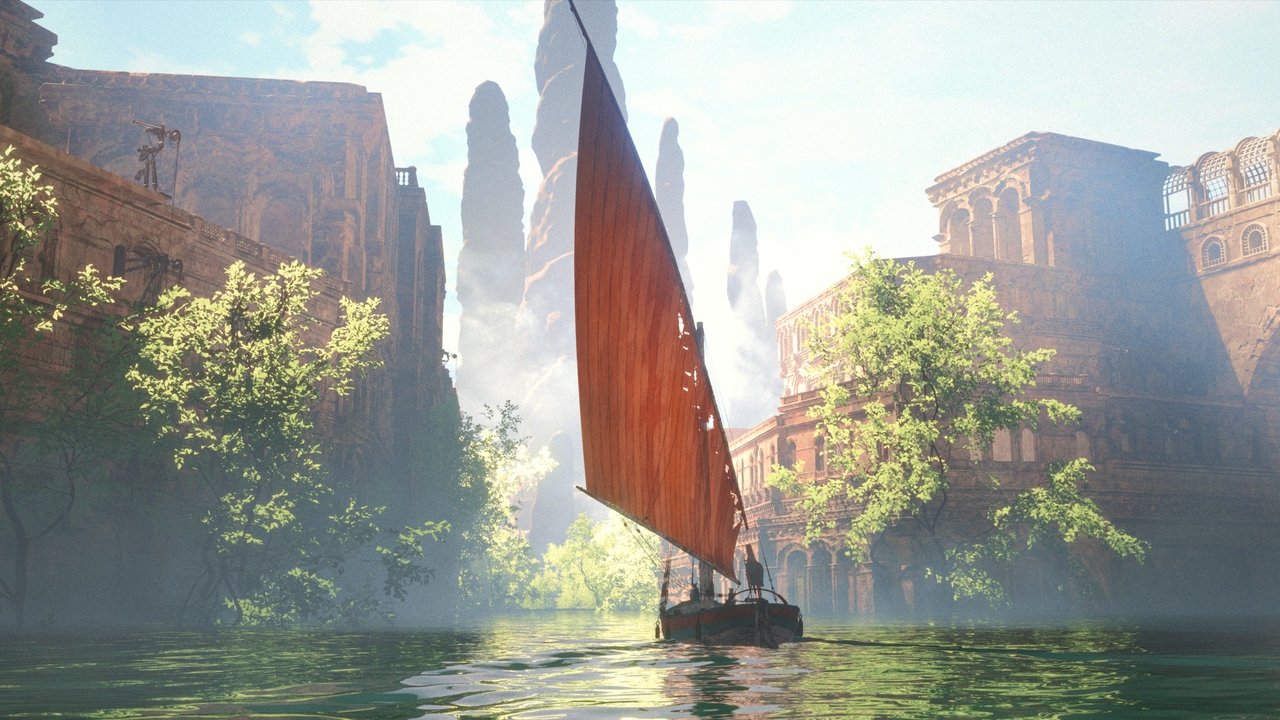
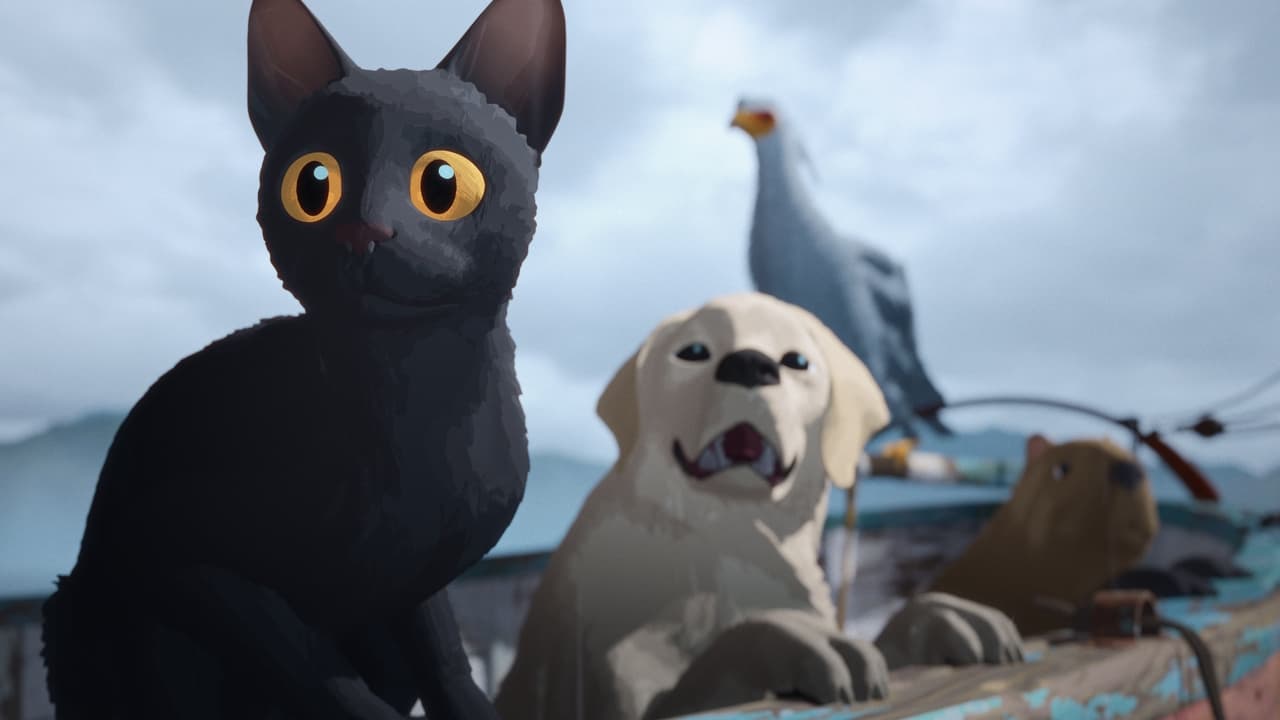
The premise is deceptively simple: the water is rising. A solitary black cat, displaced by a mounting flood that has swallowed the remnants of human civilization (think moss-covered statues and empty libraries), finds himself on a drifting sailboat. He isn't alone. He’s joined by a mismatched crew that includes a hoarding lemur, a perpetually chill capybara, a loyal but frantic golden retriever, and a majestic secretary bird with a bum wing.
If this were a DreamWorks production, they’d be arguing about who gets the front of the boat within five minutes. Here, the drama is primal. Gints Zilbalodis and co-writer Matīss Kaža understand that the real "adventure" isn’t just surviving the waves; it’s the agonizingly slow process of creatures overcoming their instincts to coexist. The cat’s reluctance to trust the dog isn't played for laughs—it’s played for the high stakes of survival. It’s basically Life of Pi if Pi was a shut-in with four paws and a crippling fear of getting his ears wet.
The camera work is what truly separates this from the contemporary pack. It moves with a restless, hand-held energy that feels more like a documentary filmmaker following a disaster than a 3D-rendered file. It tumbles through the water and glides through the trees, creating a sense of scale that makes the $3.7 million budget look like a clerical error. Compared to the $200 million price tags of recent Disney-Pixar outings, Flow is a masterclass in aesthetic economy.

A Budget That Punches Up
From a production standpoint, Flow is the ultimate "indie that could." Zilbalodis made his previous feature, Away (2019), entirely by himself—directing, animating, and even composing the music. For Flow, he expanded the team, but the singular, auteurist fingerprints are everywhere. Produced by Dream Well Studio and Sacrebleu Productions, the film utilized Blender to create a look that prioritizes atmosphere over hyper-realistic hair simulation.
In a cultural moment dominated by "The Volume" and virtual production techniques that can sometimes feel sterile, Flow feels tangible. The lighting—sunlight dappling through ancient ruins or the terrifying, slate-grey expanse of an open ocean—serves a narrative purpose. It isn't just "pretty"; it’s the primary storyteller. The score, also co-written by Zilbalodis, trades in minimalist, pulsing rhythms that mimic the rise and fall of the tide. It’s a brave choice in a market that usually treats silence like a bug rather than a feature. Honestly, if you can’t enjoy a film without a side-character explaining the plot to you every thirty seconds, this might be your cinematic kryptonite.
The Silence of the Pack

The philosophical weight of Flow hits you in the quietest moments. By removing human speech, the film forces us to confront our own relationship with the environment and our collective anxiety about a world in flux. It engages with the current climate conversation without ever preaching. The flood isn't an "event" to be solved by a hero's journey; it’s a new reality to be navigated.
There’s a scene in a flooded library that I’ll probably be thinking about for the next decade. The cat navigates floating books—the sum of human knowledge now reduced to stepping stones—and for a second, you feel the weight of what’s been lost. But then, the dog barks, or the lemur finds a shiny trinket, and the film pulls you back to the present. It’s a study of "the now." Animals don't ruminate on the "before-times," and their pragmatism is both heartbreaking and hopeful.
The film premiered at Cannes in the Un Certain Regard section to a massive standing ovation, and it’s easy to see why. It’s a "family movie" in the sense that kids will love the animals, but it’s a "cinephile movie" in the way it uses the frame. It doesn't rely on nostalgia or legacy sequels to earn your attention. It earns it through pure, unadulterated wonder.
Flow is a miracle of independent animation that proves you don't need a massive studio or a recognizable IP to create something mythic. It’s a journey that feels both ancient and incredibly urgent, a reminder that even when the world is submerged, the impulse to find a companion is the one thing that won't drown. It’s easily one of the most vital pieces of cinema released this decade, and I promise you won’t miss the talking animals for a single second.
Keep Exploring...
-

How to Train Your Dragon: Homecoming
2019
-
Wolfwalkers
2020
-
Raya and the Last Dragon
2021
-
The Boy and the Beast
2015
-

The Little Prince
2015
-
Castle in the Sky
1986
-
Frozen II
2019
-

Klaus
2019
-
Red Shoes and the Seven Dwarfs
2019
-
Onward
2020
-
Over the Moon
2020
-
The Croods: A New Age
2020
-
Trolls World Tour
2020
-
Luca
2021
-

Minions: The Rise of Gru
2022
-
Puss in Boots: The Last Wish
2022
-
The Sea Beast
2022
-
Nimona
2023
-
The Boy and the Heron
2023
-
The Super Mario Bros. Movie
2023