Gladiator II
"Glory, gore, and Denzel in a toga."
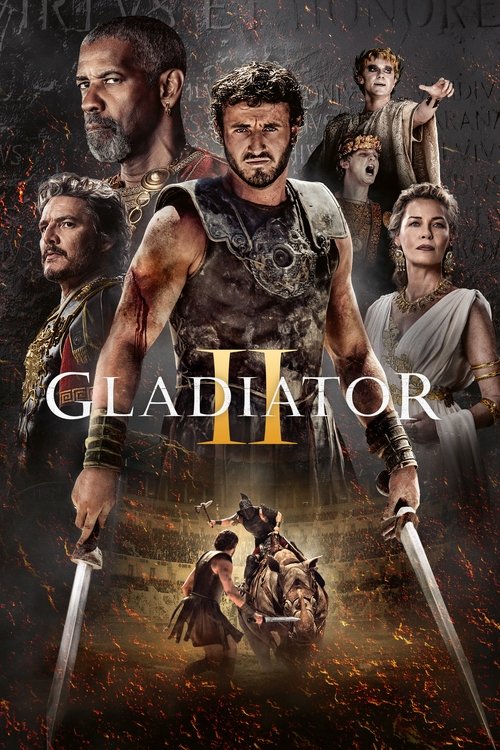
Ridley Scott is 86 years old, and he has officially reached the "I’ll do whatever I want" stage of his career. It is a glorious place to be. While other directors his age are making quiet, contemplative dramas about the sunset of life, Scott decided to spend $310 million to film a sequence where a man fights a CGI rhinoceros and a pool full of sharks. There is an audacity to Gladiator II that feels refreshing in our era of sanitized, committee-driven blockbusters. It’s loud, it’s bloody, and it treats historical accuracy like a suggestion made by someone Scott didn’t particularly like at a party.

I watched this in a theater where the guy two seats over was wearing a digital watch that beeped every hour, and honestly, the chime synced up perfectly with a beheading in the second act. It gave the whole experience a weirdly rhythmic, "Roman holiday" vibe that the film itself leans into. We aren’t here for a history lesson; we’re here for the lions.
The Shadow of the General
Following up on a Best Picture winner twenty-four years later is a fool’s errand, and Scott seems to know it. Instead of trying to out-brood the original, he cranks the dial toward operatic camp. Paul Mescal steps into the sandals of Lucius, the son of Lucilla (Connie Nielsen), who has been living in exile in North Africa. When Rome—led by General Acacius (Pedro Pascal)—invades his home, Lucius is taken prisoner and sold into the gladiatorial pits.
Mescal has a difficult job. He doesn’t have the weathered, "I’m too old for this" gravitas that Russell Crowe brought to Maximus. Instead, he plays Lucius with a simmering, feral rage. He looks like he’s spent the last decade doing nothing but lifting heavy rocks and hating his mother. While he’s a capable lead, the film often feels like it’s checking off boxes from the first movie’s grocery list: The Wheat Fields? Check. The "Strength and Honor" mantra? Check. A protagonist who just wants to go home to his family? Check. It’s a legacy sequel that knows exactly which buttons to press to make the nostalgia-centers of our brains light up.
Denzel’s Roman Holiday

If Paul Mescal is the heart of the film, Denzel Washington is the undisputed electric motor. Playing Macrinus, a wealthy arms dealer and gladiator owner with designs on the throne, Washington is having more fun than anyone has had in a Roman epic since Peter Ustinov. He moves through the marble halls with a swagger that feels entirely modern yet perfectly at home. He’s a puppet master who isn't afraid to get his hands dirty, and every time he’s on screen, the movie's energy doubles.
Contrast that with the "villains" of the piece, the twin Emperors Geta (Joseph Quinn) and Caracalla (Fred Hechinger). They are portrayed as incestuous, syphilitic, makeup-clad nightmares who represent the absolute rot of the Empire. They are essentially the Roman version of Beavis and Butt-Head if they had the power to sentence you to death for a bad joke. While they provide a grotesque focal point for our hatred, they lack the tragic complexity of Joaquin Phoenix’s Commodus. They aren't sad; they're just spoiled, which makes their eventual downfalls feel more like a cleaning service than a climax.
The Logistics of Chaos
Turns out, making a movie this big is a nightmare. The production was hit by the SAG-AFTRA strike, which ballooned the budget from an already-massive $165 million to a staggering $310 million. You can see every cent of that money on the screen. The recreations of the Colosseum—built practically in Malta—are breathtaking. Scott’s longtime cinematographer, John Mathieson, captures the dust and the blood with a clarity that puts most Marvel movies to shame.
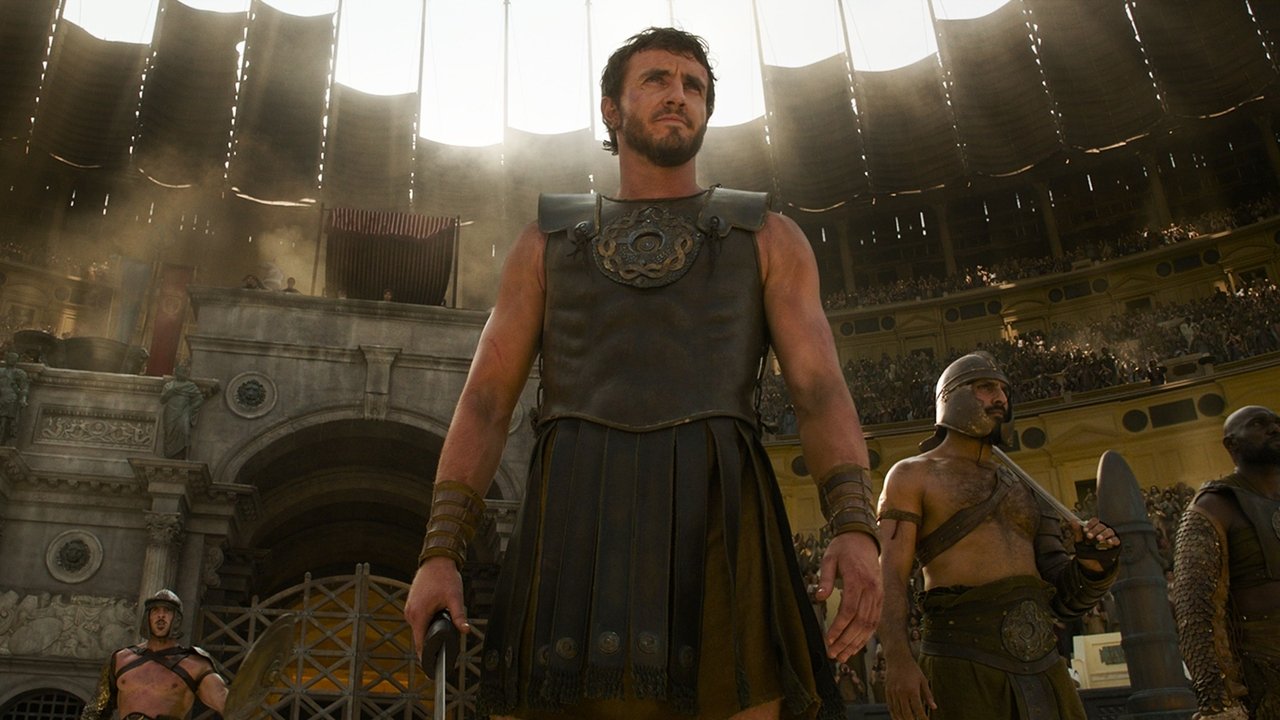
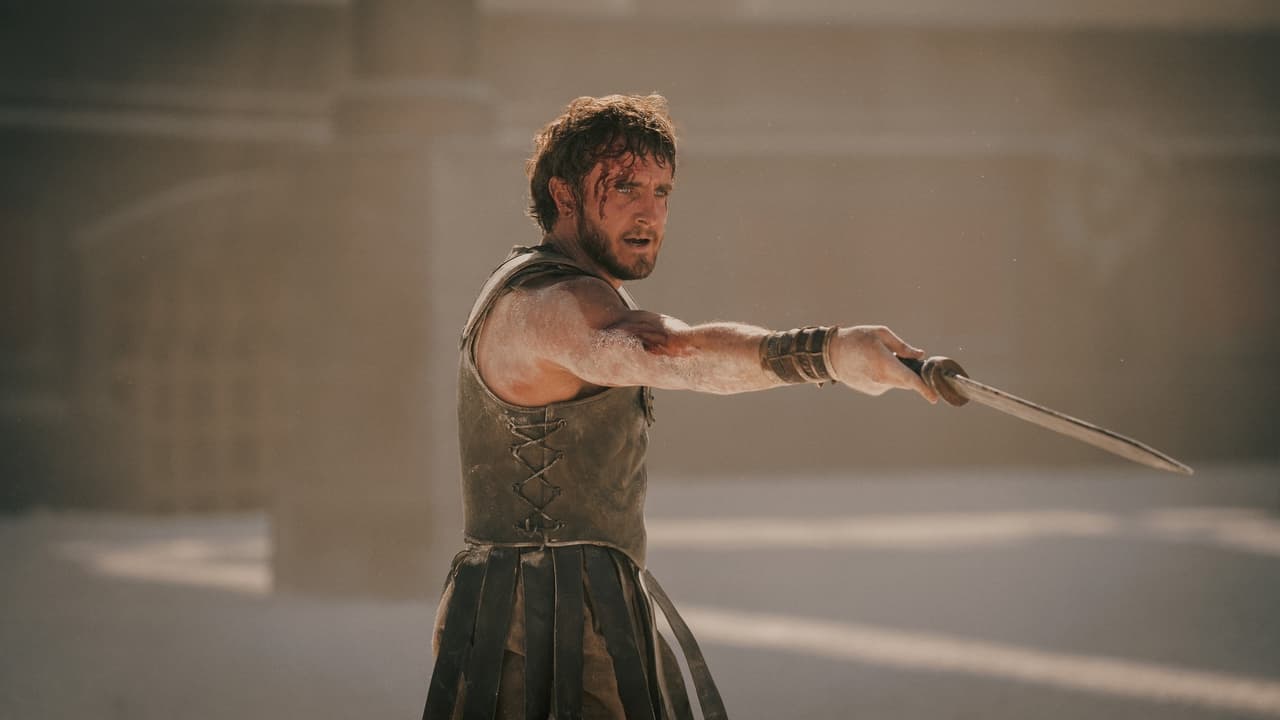
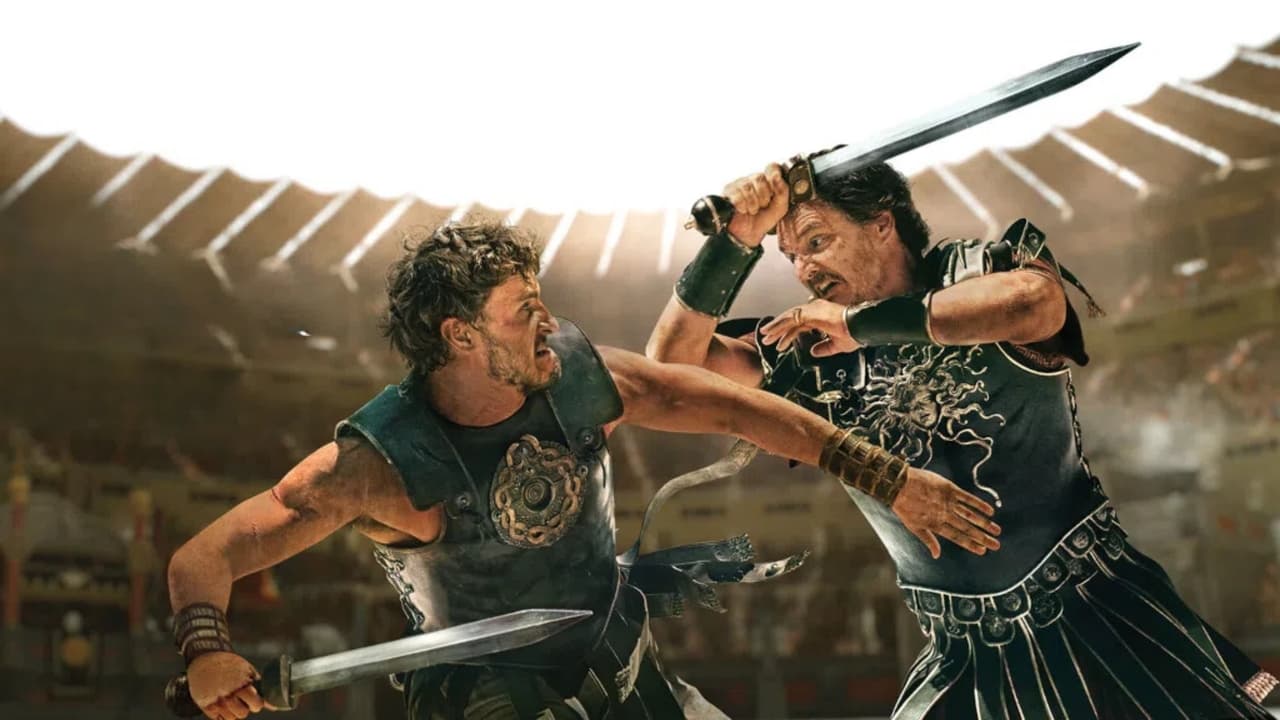
The action choreography is where the "Contemporary Cinema" of it all really shines. While the 2000 original used shaky cam and fast cuts to hide some of its limitations, the 2024 version is confident in its scale. The naval battle inside the flooded arena is a high-water mark (pun intended) for the genre. Apparently, the "sharks in the Colosseum" thing is a point of contention for historians, but Ridley Scott’s response to the critics was basically: "I don't care, it looks cool." He’s right. It looks very cool.
There’s also a bit of behind-the-scenes weirdness involving the baboons. In an early sequence, Lucius fights a pack of mutated, terrifying baboons. Scott apparently got the idea after watching a video of real baboons attacking tourists, and he insisted they look as demonic as possible. It’s those strange, specific impulses that keep the film from feeling like a corporate product.
Gladiator II doesn't quite capture the lightning-in-a-bottle soul of the original, but it succeeds as a gargantuan piece of entertainment. It’s a film that understands the "Are you not entertained?" ethos better than almost any other sequel of the last decade. It manages to balance the weight of a legacy brand with the sheer, unadulterated joy of watching Denzel Washington manipulate an empire while wearing enough gold jewelry to sink a trireme.
Is it a masterpiece? Probably not. Is it the kind of movie we need more of in theaters—big, messy, practical, and unapologetically ambitious? Absolutely. Just don't expect a history lesson, and maybe check if your neighbor's watch is silenced before the lights go down.
Keep Exploring...
-

Gladiator
2000
-
The Last Duel
2021
-
Kingdom of Heaven
2005
-
Exodus: Gods and Kings
2014
-
Wonder Woman 1984
2020
-
House of Gucci
2021
-

In the Heart of the Sea
2015
-

The Huntsman: Winter's War
2016
-
The Darkest Minds
2018
-
Triple Frontier
2019
-

Napoleon
2023
-
Kraven the Hunter
2024
-

The Fantastic 4: First Steps
2025
-

Gran Turismo
2023
-
Polar
2019
-

Karate Kid: Legends
2025
-
Robin Hood
2010
-

Alita: Battle Angel
2019
-
Gemini Man
2019
-
Pokémon Detective Pikachu
2019