IF
"Magic is only a memory away."
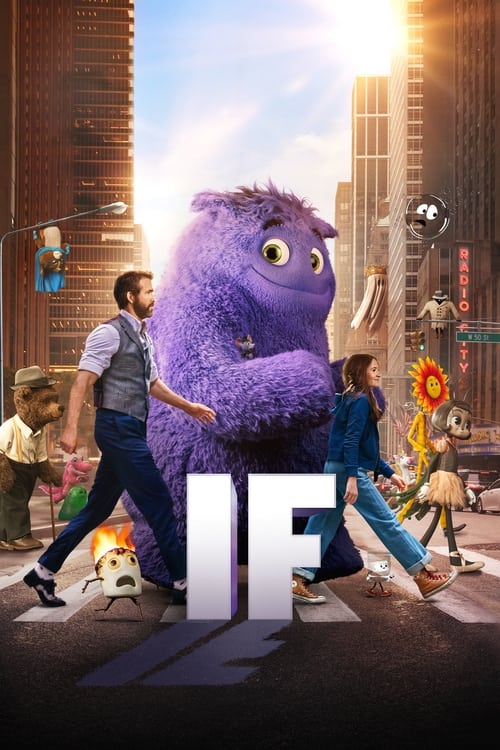
I remember exactly where I was when I realized I’d grown up: I was twelve, and I suddenly felt "too big" to sit on the floor and play with my LEGO castle. It wasn’t a choice; it was a biological eviction from childhood. John Krasinski clearly feels that same sting of loss, because his latest directorial effort, IF, is a $110 million attempt to build a bridge back to that floor. It’s a movie that tries so hard to make you cry that you can almost feel Krasinski standing behind your theater seat with a box of tissues and a hopeful expression.
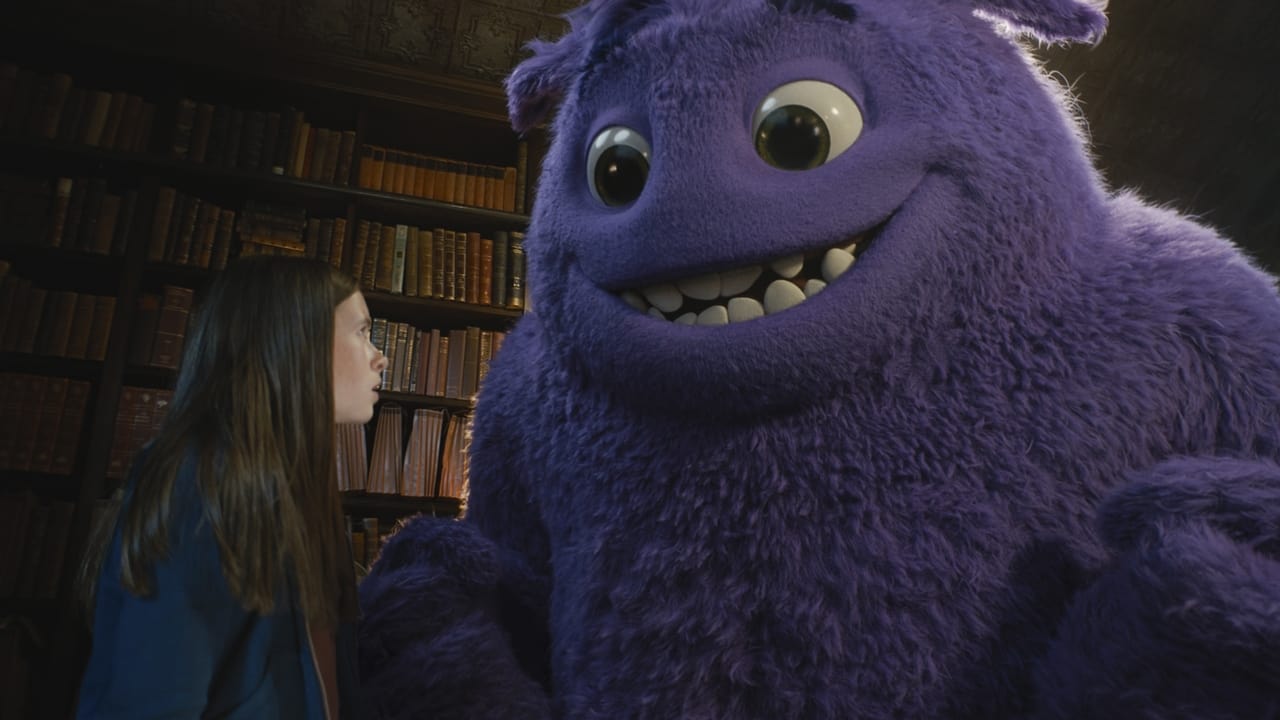
I caught this on a Tuesday afternoon in a theater where the air conditioning was set to "Arctic Tundra," and the guy three seats down was wearing a hoodie that said Emotional Support Human, which felt aggressively on-brand for a movie about sentient security blankets. Despite the frostbite, there’s a warmth here that’s hard to ignore, even if the movie occasionally trips over its own oversized, furry feet.
The Girl Who Saw Too Much
At the center of this whimsical whirlwind is Bea, played by Cailey Fleming with a level of soulfulness that puts most adult actors to shame. Bea is staying with her grandmother (Fiona Shaw) in a creaky, character-filled New York apartment while her dad (John Krasinski) awaits heart surgery. It’s a heavy setup for a "family comedy," but it grounds the fantasy in something real.
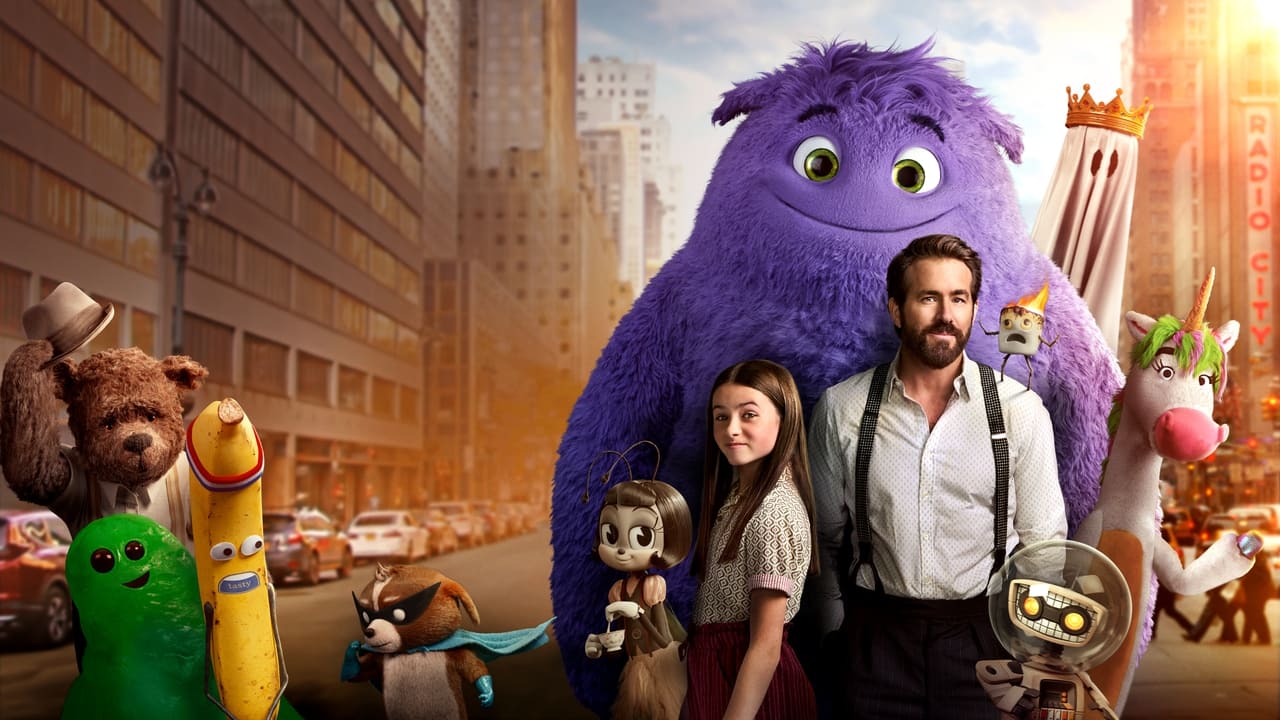
The gear-shift happens when Bea spots a neurotic moth-ball-looking creature and a man in a vest who looks exactly like Ryan Reynolds. It turns out she can see "IFs"—Imaginary Friends who have been abandoned by their now-adult humans. Reynolds plays Cal, the reluctant superintendent of a retirement home for these forgotten figments.
Reynolds is interesting here. In our current era of "Peak Reynolds," where his meta-ironic Deadpool persona has bled into almost everything he touches, IF asks him to dial it back. He’s still got the fast-twitch comedic timing, but he’s playing a character who feels genuinely tired. It’s a refreshing change of pace to see him actually acting instead of just narrating his own smirk.
A Voice Cast for the Ages
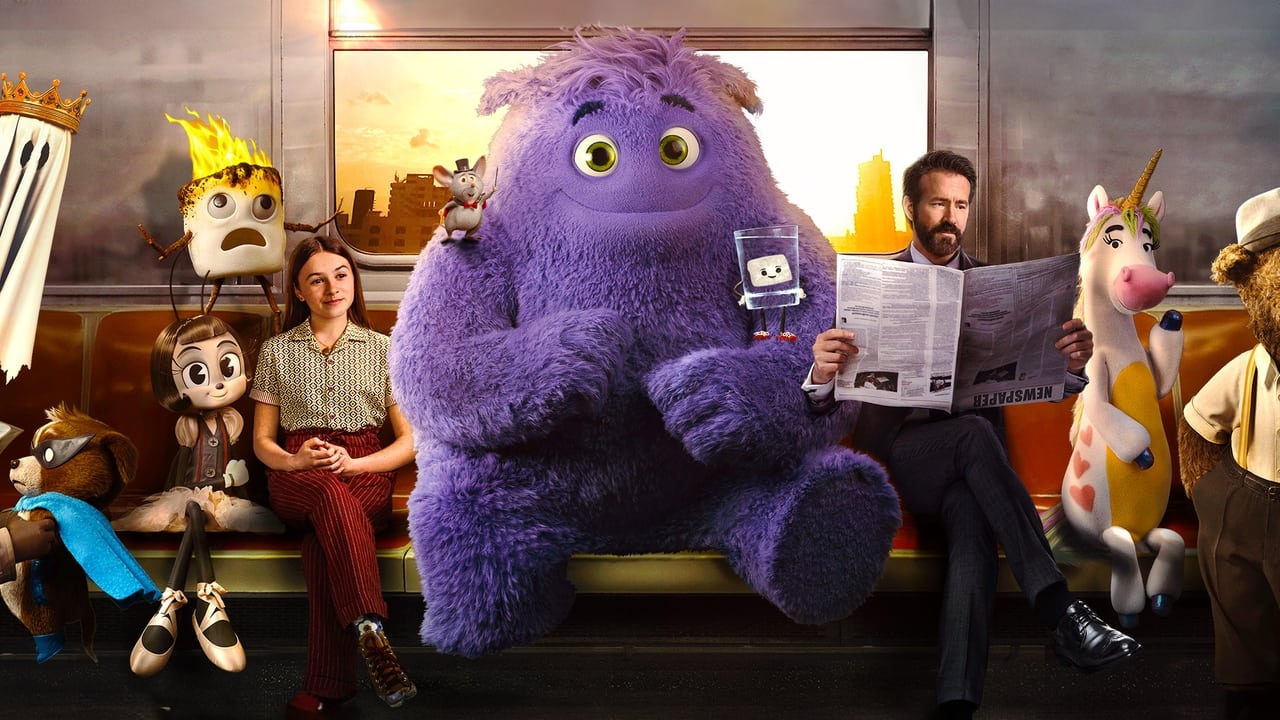
The real draw, of course, is the IFs themselves. This is where Krasinski’s Hollywood Rolodex really shines. We get Steve Carell as Blue (who is actually purple, a running gag that stays funny longer than it should), Phoebe Waller-Bridge as the elegant Blossom, and even a late, great turn by Louis Gossett Jr. as an elderly teddy bear.
The comedy here is largely physical and character-driven. Steve Carell’s performance as Blue is a masterclass in "clumsy optimism." The way Blue moves—like a beanbag chair struggling with gravity—provides the film’s best visual gags. There’s a sequence in a secret facility under Coney Island where the IFs live that feels like a fever dream designed by a six-year-old with a sugar rush. It’s chaotic, colorful, and looks like a Pixar movie accidentally broke out into the real world.
However, the "Contemporary Cinema" problem of CGI integration is present. While the IFs are beautifully rendered, they sometimes feel like they’re hovering slightly above the floor rather than standing on it. In an age where we’ve seen the seamlessness of Paddington 2, the bar is sky-high, and IF clears it by an inch, not a mile.
Heartstrings and Hand-Wringing
If you’re looking for a tight, logical plot, IF might give you a headache. The "rules" of the world are fuzzy at best. Why can Bea see them? Why can Cal? Why does one IF look like a literal puddle of drool? The movie doesn't care, and honestly, after twenty minutes, I didn't either. This is a movie that operates entirely on "vibe logic."

The film fits squarely into the current trend of "healing cinema"—stories released post-pandemic that focus heavily on processing grief and reconnecting with lost parts of ourselves. It’s sentimental to a fault. Michael Giacchino’s score is doing a lot of heavy lifting, swells of strings telling you exactly when to feel "The Big Sad." At times, it feels like Krasinski is checking off a "How to Make the Audience Sob" checklist rather than letting the story breathe.
One of the coolest behind-the-scenes details is that Krasinski actually played the character "Marshmallow" on set during filming to give the actors a physical presence to interact with. It’s that kind of earnestness that saves the film from its own schmaltz. It’s a movie made by a dad, for dads, about the terror of watching your kids grow up.
IF is a messy, beautiful, slightly manipulative hug of a movie. It doesn't quite reach the heights of the Amblin classics it’s trying to emulate, and it occasionally gets bogged down in its own whimsy, but it’s an original story in a summer season usually dominated by "Part 4s" and "Part 5s." Even if it makes you roll your eyes once or twice, it’ll likely have you checking under your bed for your old teddy bear by the time the credits roll. It’s not a masterpiece, but in 2024, a movie with this much genuine heart feels like a necessary anomaly.
Keep Exploring...
-
Clifford the Big Red Dog
2021
-
Ruby Gillman, Teenage Kraken
2023
-

Trolls Band Together
2023
-
Scooby-Doo! Return to Zombie Island
2019
-

The Christmas Chronicles: Part Two
2020
-
The Addams Family 2
2021
-
Disenchanted
2022
-
Hocus Pocus 2
2022
-
Slumberland
2022
-
The Croods: A New Age
2020
-
Red Shoes and the Seven Dwarfs
2019
-
The Willoughbys
2020
-
Wish Dragon
2021
-

A Cinderella Story: If the Shoe Fits
2016
-
Olaf's Frozen Adventure
2017
-
Goosebumps 2: Haunted Halloween
2018
-
Frozen II
2019
-
Dolittle
2020
-
Onward
2020
-
Trolls World Tour
2020