I'm Still Here
"Silence cannot erase what love remembers."

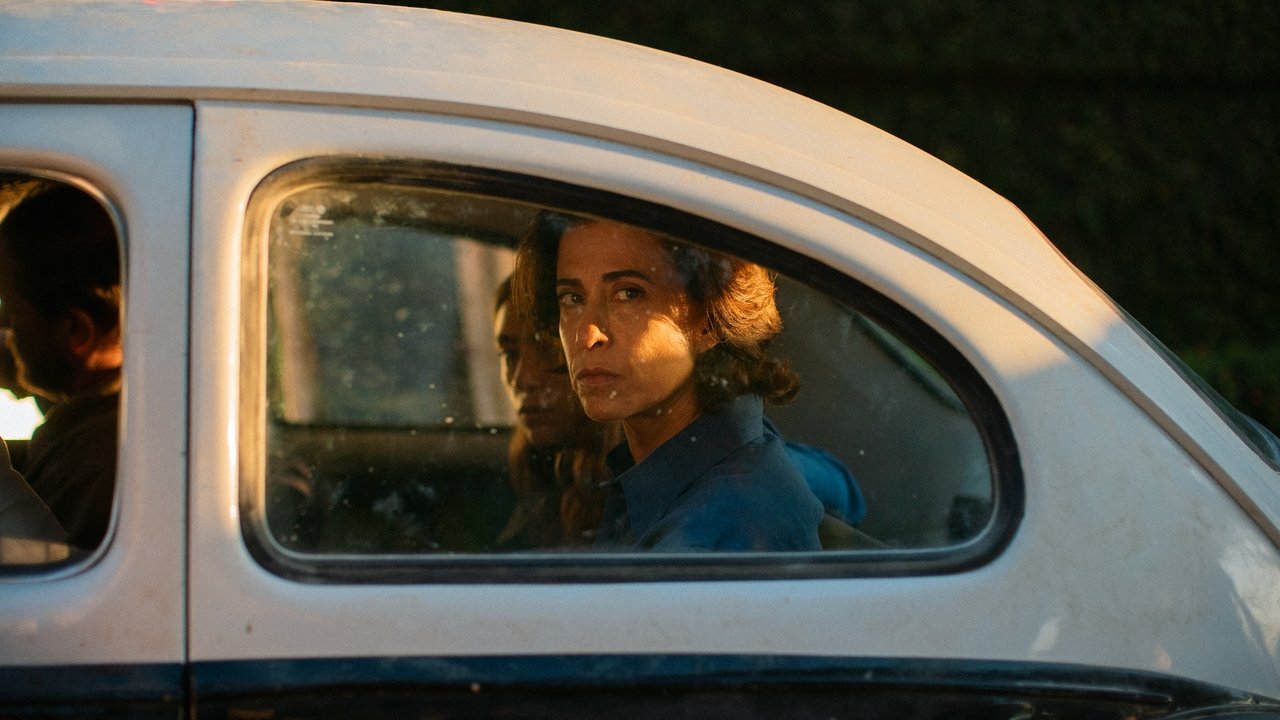
The sun in 1971 Rio de Janeiro doesn't look like the sun anywhere else. It’s a thick, honeyed light that seems to promise an eternal afternoon of bossa nova and beach trips. But in Walter Salles’ I’m Still Here (originally Ainda Estou Aqui), that light feels increasingly like a spotlight—the kind used in an interrogation room. I watched this while wearing a sweater that's slightly too small, feeling a literal constriction that mirrored the atmospheric dread creeping into the Paiva household, and let me tell you, it’s a film that lingers in your marrow long after the credits roll.

The House of Louder Whispers
For those who haven't kept up with Brazilian history, the 1970s were a fractured time. The military dictatorship wasn't just a political backdrop; it was a ghost under the floorboards. The film introduces us to the Paiva family, led by the charismatic former congressman Rubens Paiva (Selton Mello) and his wife Eunice (Fernanda Torres). Their home is a chaotic, beautiful hub of music, teenagers, and intellectual debate. Selton Mello plays Rubens with such a magnetic, easy-going warmth that you’re immediately terrified for him. You know the history, or at least the genre conventions: a man this liked by the people is a man loathed by the state.
When the "arbitrary act" mentioned in the synopsis finally happens—Rubens is taken away for "questioning"—the film shifts gears with terrifying grace. It stops being a vibrant family drama and becomes a psychological survival kit. The way Salles captures the transition from a house full of life to a house full of waiting is masterful. It’s in the way Eunice looks at a ringing telephone or the way she tries to keep the routine of her children’s lives intact while her own world is being systematically erased.
A Masterclass in Internalized Resilience
We need to talk about Fernanda Torres. If there is any justice in the current awards-obsessed landscape, her name should be everywhere. She doesn't give us the "movie version" of a grieving wife; she gives us a woman who has decided that emotional outbursts are a luxury she can’t afford while the wolves are at the door. It is a performance of incredible stillness. She communicates through the tightening of a jaw or the way she holds a cigarette—a silent, fierce intelligence that realizes her only weapon against a regime that wants to "disappear" her husband is her own refusal to be erased.

The meta-textual layering here is enough to give any cinema buff chills. Fernanda Torres is the daughter of Fernanda Montenegro, the legendary actress who plays the older version of Eunice in the film’s final act. To see the daughter portray the woman’s middle years and then pass the baton to her real-life mother is a stroke of casting genius that feels more like a spiritual inheritance. Fernanda Montenegro (who many of us remember from Salles’ Central Station) has a face that contains the entire history of Brazilian cinema, and her appearance here provides a closure that is both heartbreaking and profoundly moving.
Behind the Curtains of History
There’s a layer of authenticity here that is rare in modern historical dramas. It turns out that Walter Salles actually knew the Paiva family in his youth; he sat on those couches and breathed that air. This isn't just a director picking a "relevant" subject; it's a man returning to a formative memory. You can feel that intimacy in the cinematography by Adrian Teijido, which avoids the hyper-saturated "nostalgia" look for something more tactile and urgent.
The script by Murilo Hauser and Heitor Lorega (based on the memoir by Marcelo Rubens Paiva, the son) avoids the trap of being a political lecture. It understands that the most effective way to show the cruelty of a dictatorship is to show the empty chair at the dinner table. It’s a film about the logistics of loss—how you deal with a bank account you can’t access because your husband doesn't officially "exist" anymore, or how you explain the unexplainable to a child.

Why It Matters Now
In an era where we are often fatigued by "important" films that feel like homework, I’m Still Here manages to be deeply intellectual without being cold. It asks a heavy philosophical question: How do you maintain your humanity when the state is designed to strip it away? The film’s answer lies in the title. It’s about presence. It’s about the fact that even if you take the man, the memory he left in his children and the strength he left in his wife creates a legacy that no amount of military force can crush.
Walter Salles has reminded me why we go to the movies—not just to escape, but to remember. The film avoids the flashy CGI and de-aging tricks of contemporary blockbusters, relying instead on the raw power of human expression. It’s a quiet film that screams. It’s a contemporary masterpiece that feels like it’s been waiting fifty years to be told, and it doesn't waste a single frame of that time. If you have any interest in the power of the human spirit or just want to see a world-class acting clinic, find a way to see this. Just make sure your coffee is hot, because the chill from the screen is real.

Keep Exploring...
-
The Iron Claw
2023
-
The Boy Who Harnessed the Wind
2019
-
One Life
2023
-

A Taxi Driver
2017
-
Little Women
2019
-
Portrait of a Lady on Fire
2019
-
The Trial of the Chicago 7
2020
-

A Beautiful Day in the Neighborhood
2019
-
An Officer and a Spy
2019
-

Harriet
2019
-
Hotel Mumbai
2019
-
The First King
2019
-

The Professor and the Madman
2019
-

The Outpost
2020
-

Belfast
2021
-
Judas and the Black Messiah
2021
-
The Three Musketeers: D'Artagnan
2023
-

There's Still Tomorrow
2023
-
The Brutalist
2024
-

Ford v Ferrari
2019