It Ends with Us
"The hardest choice is the one you make for yourself."

Walking into a screening of It Ends with Us, you could practically feel the weight of a billion TikTok scrolls pressing against the theater walls. We’re living in an era where the "BookTok-to-Blockbuster" pipeline is the new superhero factory, and Colleen Hoover is its Stan Lee. I watched this in a theater where the AC was blasted so high I had to wrap my popcorn tub for warmth like a radiator, which honestly made the chilling shifts in Justin Baldoni’s performance feel even more icy.

A Floral Facade with a Jagged Edge
The film follows Lily Bloom (Blake Lively), a woman who moves to Boston to open a flower shop—a dream that feels pulled straight from a "Coastal Grandmother" Pinterest board. Blake Lively brings a specific kind of magnetism here; she’s breezy and aspirational, but she manages to layer in a flickering shadow of her character’s traumatic past. When she meets Ryle Kincaid (Justin Baldoni, who also directed), the chemistry is immediate and suspiciously perfect.
But this isn’t a standard Nora Ephron romp. The film’s greatest strength—and its most controversial element—is how it lulls you into the comfort of a rom-com before pulling the rug out. I’ve seen my fair share of contemporary dramas, but rarely one that captures the "frog in a boiling pot" sensation of an abusive relationship this effectively. The marketing for this movie was a masterclass in gaslighting the audience into thinking they were seeing 'Mamma Mia' when they were actually getting a harrowing cautionary tale. That tonal whiplash is intentional, reflecting how Lily herself is blinded by Ryle’s charm.
Performances that Anchor the Chaos
Justin Baldoni takes on a massive challenge here, playing a character who must be both the dream guy and the monster. He succeeds because he doesn't play Ryle as a mustache-twirling villain; he plays him as a man with deep-seated issues who weaponizes his charisma. It’s a difficult watch, especially when the "accidents" start happening.

On the flip side, we have Brandon Sklenar as Atlas Corrigan, Lily’s first love who reappears just as her new life begins to fracture. Sklenar (who many will recognize from 1923) has a quiet, soulful presence that acts as the film’s moral North Star. Then there’s Jenny Slate as Allysa, Ryle’s sister and Lily’s best friend. Jenny Slate is the MVP of the supporting cast, providing much-needed levity and a grounded, emotional performance that keeps the film from drifting too far into melodrama.
The visual language of the film, captured by cinematographer Barry Peterson (Game Night, 21 Jump Street), is lush and saturated. It looks expensive and "now," utilizing the aesthetic of modern Boston to create a world that feels both inviting and claustrophobic. However, I have to mention the costumes—Lily’s wardrobe looks like she lost a fight with a clearance rack at a Desigual outlet. It’s a bizarre choice for a character meant to be a style-conscious entrepreneur, and it became a major talking point on social media, but in a weird way, it makes her feel more like a real, slightly messy person rather than a polished movie trope.
The $350 Million Conversation Piece
In our current cinematic landscape, box office success is often reserved for capes or sequels, but It Ends with Us proved that the female gaze is a financial juggernaut. On a modest $25 million budget, the film raked in over $350 million worldwide. It became a cultural lightning rod, not just for its subject matter, but for the alleged "creative differences" behind the scenes. Apparently, there were two different cuts of the film—one favored by Baldoni and one by Lively—and the ensuing "press tour drama" became a spectator sport on Instagram and TikTok.
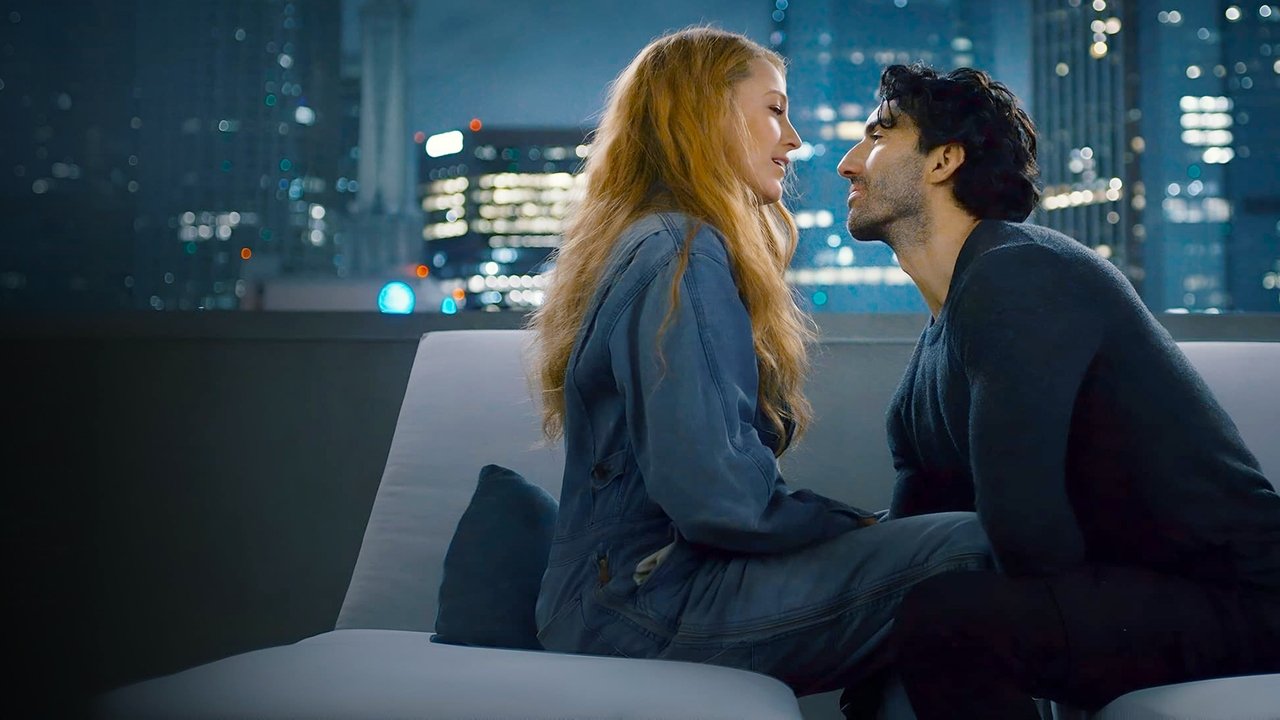
The film also leans heavily into its contemporary roots with its soundtrack. The inclusion of Taylor Swift’s "My Tears Ricochet" in the marketing was a stroke of genius, immediately signaling to the "Swiftie" demographic that this story would be one of beautiful, localized pain. Beyond the gossip, the film handles its core theme—breaking the cycle of domestic violence—with a surprising amount of grace. It avoids the "misery porn" trap by focusing on Lily’s agency and her ultimate realization that she has to be the one to stop the pattern for her daughter’s sake.
It Ends with Us isn't a perfect film—it's about fifteen minutes too long and the dialogue occasionally leans into "inspirational quote" territory—but it is a significant one. It’s a rare example of a modern blockbuster that uses its massive platform to tackle a difficult social issue without losing its entertainment value. Whether you’re there for the romance, the "Atlas vs. Ryle" debate, or the fascinating behind-the-scenes lore, it’s a film that demands to be discussed. It’s a reminder that even in the age of streaming, a well-told, emotionally resonant story can still turn the local multiplex into a communal experience.
Keep Exploring...
-

Five Feet Apart
2019
-
Ticket to Paradise
2022
-
Where the Crawdads Sing
2022
-

Materialists
2025
-

Clouds
2020
-
The Age of Adaline
2015
-
Downton Abbey
2019
-

Wicked
2024
-
The Shape of Water
2017
-

A Star Is Born
2018
-
The Shallows
2016
-
Cinderella
2015
-
Bridget Jones's Baby
2016
-
Fifty Shades Freed
2018
-
Little Women
2019
-
The Aeronauts
2019
-
Tolkien
2019
-
I Still Believe
2020
-

CODA
2021
-
Licorice Pizza
2021