Transformers One
"Before the war, they had a choice."
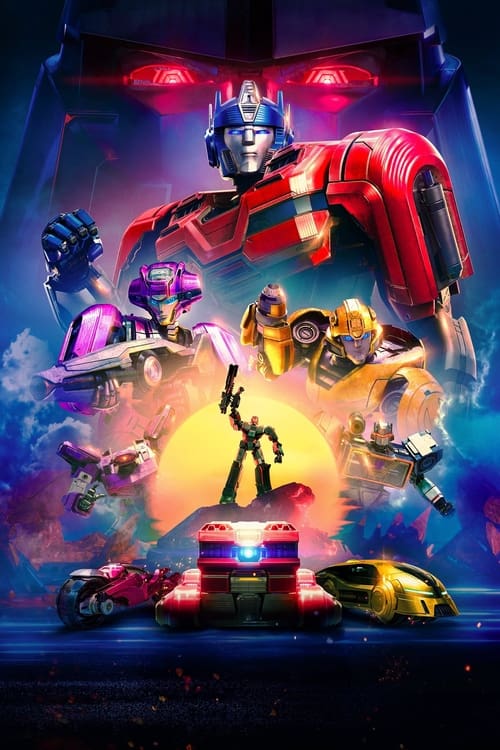
I went into the theater for Transformers One prepared to be the "old man yells at cloud" archetype. As someone who grew up with the boxy, hand-drawn 1986 movie—and who eventually developed a mild allergic reaction to Michael Bay's obsession with spinning cameras and exploding scrap metal—my expectations were hovering somewhere near the basement. I watched this in a theater where the air conditioning was dialed to "Arctic Tundra," and I spent the first ten minutes huddled in my hoodie, wondering if I really needed another origin story for characters whose fates have been set in stone (or Energon) for forty years.
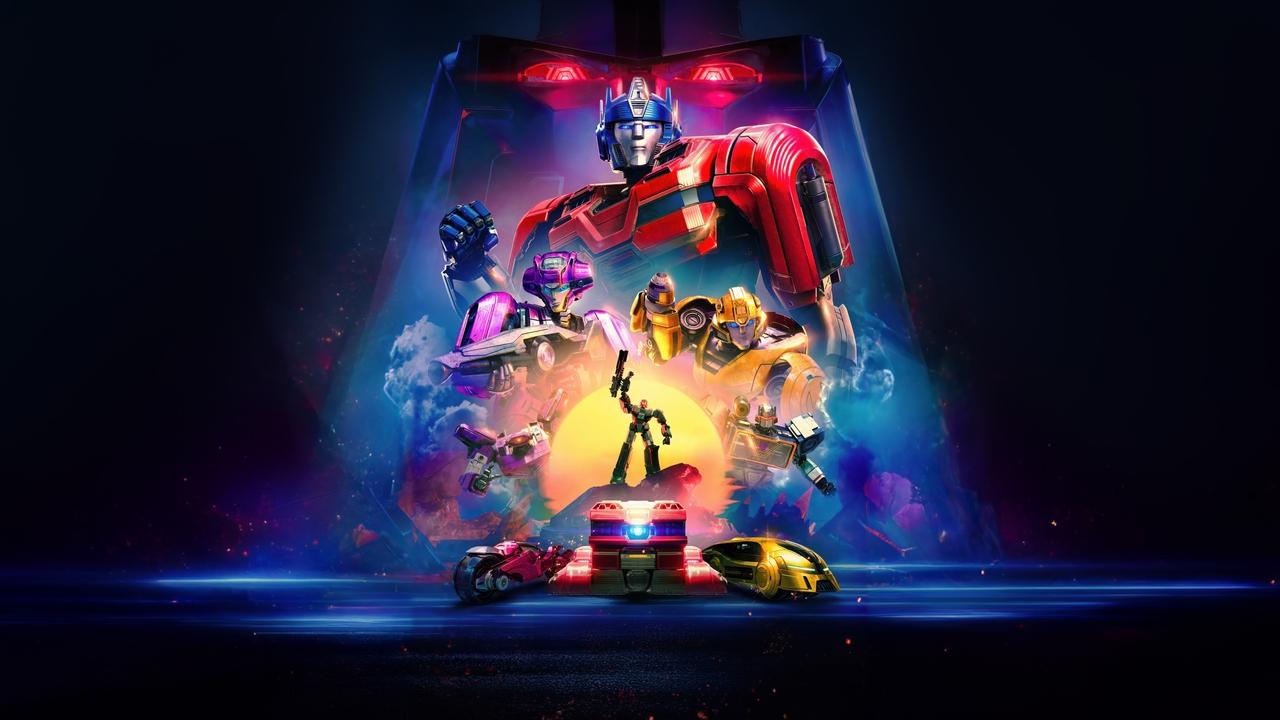
But then, something strange happened. I stopped noticing the cold. I stopped checking my watch. I realized I was actually leaning forward, genuinely invested in the labor disputes of giant sentient robots.
The Gospel of the Cogless
In our current era of "franchise fatigue," where every studio is desperately trying to strip-mine nostalgia for a few more ounces of ore, Transformers One feels like a minor miracle. It’s a contemporary sci-fi film that understands that world-building isn't just about showing us cool skylines; it’s about the rules that govern those skylines.
Director Josh Cooley (who previously navigated the existential crisis of a plastic fork in Toy Story 4) introduces us to a Cybertron that is vibrant, tiered, and deeply unfair. We meet Orion Pax (Chris Hemsworth) and D-16 (Brian Tyree Henry) not as the icons they will become, but as "manual bots"—miners born without the "cogs" that allow them to transform. They are the literal underclass, digging for the fuel that keeps their society running while being told by the gilded Sentinel Prime (Jon Hamm) that their service is their destiny.
I found the choice to make the "transformation" a matter of biological (or mechanical) class rather than just a natural birthright to be a stroke of genius. It moves the film away from being a simple toy commercial and into the realm of social allegory. It asks a quintessentially sci-fi question: What happens to a soul when it’s told it’s born for the dirt?
A Divorce for the Ages

The "cerebral" heart of this movie isn't found in the physics of how a robot becomes a jet, but in the slow-motion car crash that is the friendship between Orion and D-16. Chris Hemsworth brings a lighter, more mischievous energy to Orion Pax than the booming, stoic "Freedom is the right of all sentient beings" delivery we’re used to from Peter Cullen. He’s a dreamer, a rule-breaker, and—at times—the kind of annoying optimist you’d want to push into a trash compactor.
But the show belongs to Brian Tyree Henry. We’ve seen Megatron as a cackling villain for decades, but here, his descent into darkness is earned. It’s a tragedy. He starts as a loyal friend who believes in the system, and his radicalization is a direct response to betrayal. Watching his face—rendered with incredible nuance by the wizards at ILM—harden from hope into a mask of fascist fury is genuinely unsettling.
By the time Scarlett Johansson's Elita-1 and Keegan-Michael Key's B-127 (the bot who won't stop talking until he becomes the silent Bumblebee we know) join the fray, the chemistry is solidified. It’s a quartet that works because their motivations aren't just "save the world." They’re trying to find their place in a world that lied to them.
Pixels with Purpose
Visually, this is a massive departure from the "Bay-hem" aesthetic. Instead of the hyper-detailed, oily complexity of the live-action films, Transformers One opts for a stylized, painterly look that feels like a high-end graphic novel come to life. The transformations are "crunchy" and logical; you can see the parts moving, but they don't look like a blender full of silverware having a seizure.

There’s a specific sequence where the characters finally gain their cogs and experience the surface of Cybertron for the first time. It’s a moment of pure "what if?" sci-fi wonder. The landscape is organic and metallic all at once, shifting and growing in ways that feel alien and beautiful. It reminded me that animation is the only medium where Transformers truly belong—it’s the only place where the scale of their world doesn't feel constrained by the limitations of "realism."
Interestingly, the film managed to dodge the typical "streaming dump" fate that many mid-budget animated features face now. Despite being a contemporary release in a crowded market, it feels designed for the big screen. There’s a weight to the sound design—apparently, the team went to great lengths to make the "clink" of the metal sound distinct based on the bot's social status. It’s that kind of detail that makes the world feel lived-in.
Ultimately, Transformers One succeeds because it treats its audience like they have a brain. It doesn't rely on "I remember that character!" cameos to do the heavy lifting. Instead, it builds a compelling political and personal drama that just happens to involve twenty-foot-tall robots. It’s the origin story I didn't know I needed, proving that there’s still plenty of Energon left in this old franchise if you’re willing to dig beneath the surface.
If you’re worried about "spoilers," let’s just say you know where these characters end up. But the how and the why are what matter here. It’s a story about how trauma can lead one person to become a hero and another to become a tyrant. Megatron’s descent into fascism has more nuance than most political thrillers, and that’s a sentence I never thought I’d write about a movie based on Hasbro toys. Go see it on the biggest screen you can find—and maybe bring a hoodie, just in case the AC is as aggressive as mine was.


Keep Exploring...
-
Toy Story 4
2019
-
The Wild Robot
2024
-
DC League of Super-Pets
2022
-

How to Train Your Dragon: Homecoming
2019
-

Spider-Man: Across the Spider-Verse
2023
-
Wolfwalkers
2020
-

Minions: The Rise of Gru
2022
-
How to Train Your Dragon: The Hidden World
2019
-
Raya and the Last Dragon
2021
-
Strange World
2022
-
Riley's First Date?
2015
-
The Angry Birds Movie 2
2019
-
The Boy and the Beast
2015
-
Predator: Badlands
2025
-
Kubo and the Two Strings
2016
-
Over the Moon
2020
-
Ron's Gone Wrong
2021
-
The Sea Beast
2022
-
Nimona
2023
-
Migration
2023