F1
"Speed is the only thing that stays young."

The air in the theater smelled faintly of cleaning chemicals and overpriced butter, but the second the lights dimmed on Joseph Kosinski’s F1, I could swear I smelled burnt rubber and high-octane fuel. There is something profoundly satisfying about a movie that knows exactly how much a $250 million budget should sound. In an era where we’ve been beaten over the head with rubbery CGI superheroes tumbling through digital voids, F1 arrives like a bucket of ice water to the face. It is a loud, gorgeous, and surprisingly thoughtful reminder that there is no substitute for the physics of reality.

I watched this during a matinee where I’d mixed Cherry Coke with a Blue Raspberry ICEE; the resulting sludge looked exactly like engine coolant, which felt oddly appropriate for a film that spends half its runtime inside a vibrating cockpit.
The Physics of the Frame
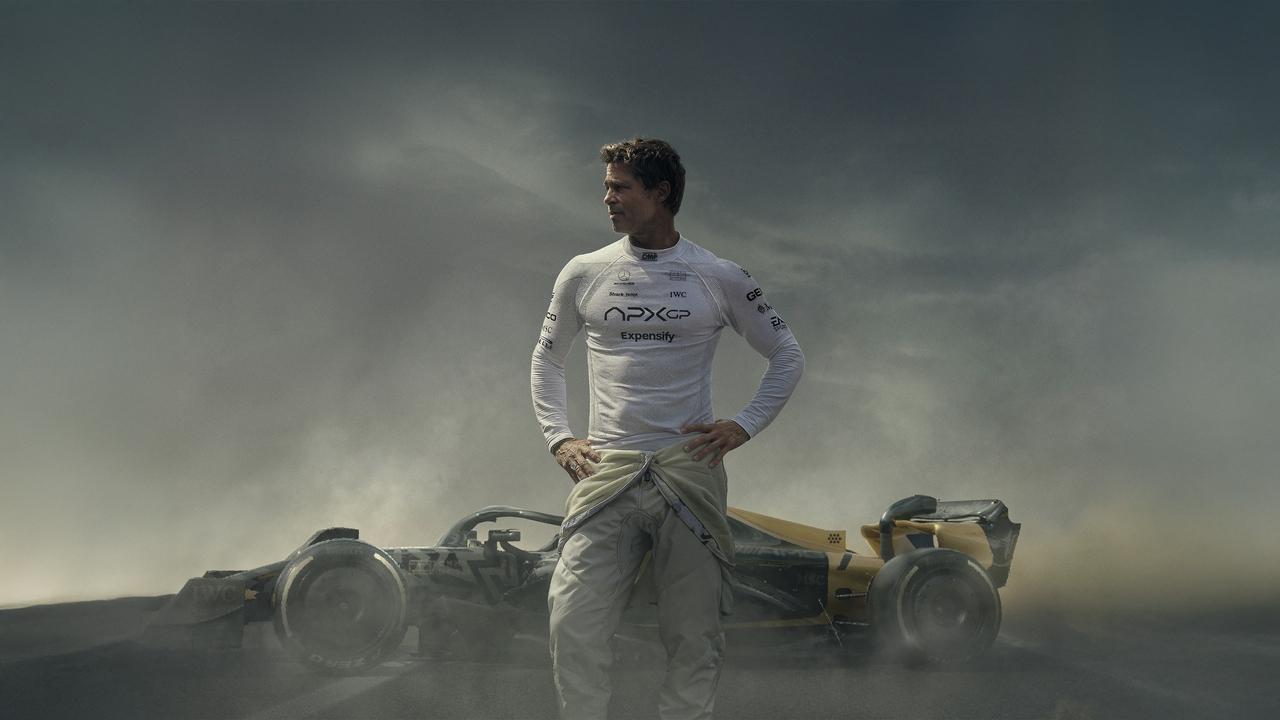
If you saw Top Gun: Maverick, you know Kosinski’s obsession with mounting IMAX cameras to things that move way too fast for human comfort. In F1, he does it again, but the stakes feel more intimate. Instead of the vastness of the sky, we are trapped in the claustrophobic carbon-fiber tub of a car going 200 mph. Brad Pitt plays Sonny Hayes with a weary, sun-baked gravitas. He doesn’t look like a movie star playing a driver; he looks like a man who has spent thirty years vibrating at a frequency the rest of us can’t hear.
The action sequences are—and I don’t say this lightly—the cinematic equivalent of a triple-shot espresso delivered via IV drip. There is a clarity to the racing that is missing from almost every other entry in the genre. You understand the line, the slipstream, and the terrifying proximity of the barriers. The decision to film during actual Grand Prix weekends, with Brad Pitt and Damson Idris actually piloting modified cars on the track, pays off in every frame. When the G-force pulls at their faces, it’s not an animator’s trick; it’s the real deal. CGI is a seasoning here, not the main course, and that makes the few digital touch-ups nearly invisible.
The Ghost in the Cockpit

While the trailers sell this as a high-speed popcorn flick, the screenplay by Ehren Kruger digs into something a bit more existential. It’s less about winning a trophy and more about the "why" of the risk. Sonny Hayes is a man who arguably should have stayed in the rearview mirror of history. His return to lead the struggling APXGP team isn't just a comeback story; it’s a study in the ego required to ignore your own mortality.
Damson Idris, playing the young hotshot Joshua Pearce, is the perfect foil. Where Pitt is all hushed tones and internal calculation, Idris is a live wire of modern ambition. Their chemistry isn't built on pithy dialogue, but on the shared language of the limit. The film asks: what happens to a man when the only place he feels alive is a seat that might become his coffin? It avoids the "meditation" trap (to use a banned word) by keeping the stakes grounded in the technical demands of the sport. It’s a cerebral take on aging that happens to be wrapped in a titanium shell.
Paddock Politics and Prestige
The supporting cast elevates this from a star vehicle to a proper ensemble drama. Javier Bardem brings a slick, desperate energy to the team owner Ruben Cervantes—he looks like he’s perpetually one bad lap away from a heart attack or a lawsuit. Kerry Condon, who was so brilliant in The Banshees of Inisherin, provides the film’s moral and technical spine as Kate McKenna. She’s the one who has to make the math work when the men are busy chasing ghosts.
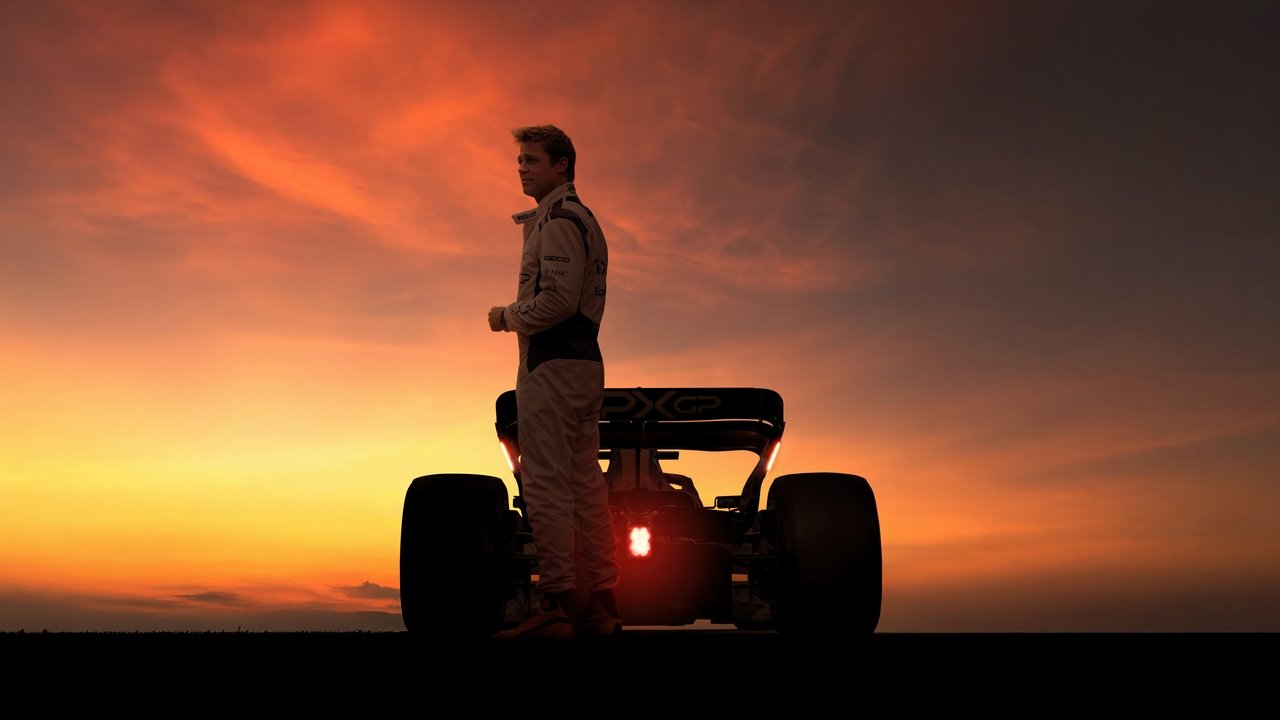
The production trivia is where the "Prestige" label really earns its keep. Apparently, seven-time champion Lewis Hamilton wasn't just a name on the credits; he was on-set as a producer, reportedly giving notes to ensure the dialogue didn't sound like "typical Hollywood racing fluff." The film also utilized a "virtual production" setup for certain weather effects, but the core of the movie remains the practical stunts choreographed by the second-unit legends who worked on The Bourne Ultimatum.
Hans Zimmer’s score is another heavy hitter here. It’s less of a melody and more of a mechanical heartbeat that syncs up with the downshifts of the engines. It’s loud, it’s intrusive, and it’s exactly what the film needs to bridge the gap between the drama in the pits and the chaos on the track.
This isn't just a movie for people who spend their Sunday mornings watching tire strategy on ESPN. It’s a masterfully executed piece of spectacle that respects its audience's intelligence. While the 156-minute runtime might feel like a long stint on hard tires for some, the payoff in the final act is a genuine rush. It captures the current cultural obsession with F1 without feeling like a commercial. Instead, it feels like a high-stakes entry into the canon of great racing cinema—one that understands that at 200 miles per hour, everyone eventually has to face themselves.
Go see it on the biggest screen you can find. Your ears will ring, your heart will race, and you might find yourself driving a little too fast on the way home. Don't say I didn't warn you.

Keep Exploring...
-
Top Gun: Maverick
2022
-
Ford v Ferrari
2019
-
Only the Brave
2017
-

The Woman King
2022
-

Gran Turismo
2023
-
RRR
2022
-
Sound of Freedom
2023
-
The Wild Robot
2024
-

Evangelion: 3.0+1.0 Thrice Upon a Time
2021
-
The Count of Monte Cristo
2024
-

Logan
2017
-

1917
2019
-
Finch
2021
-
Guillermo del Toro's Pinocchio
2022
-
Society of the Snow
2023
-
Allied
2016
-
The Greatest Showman
2017
-
The Father
2020
-

The Last Duel
2021
-
Creed III
2023