Kayara
"The message is heavier than the mountain."

There is a specific, lung-burning silence found only at ten thousand feet, where the air is too thin for secrets and the landscape looks like it was crumpled by a god’s angry hand. In most animated adventures, mountains are just pretty backdrops—purple-tinted triangles for the hero to pose against. But in Cesar Zelada’s Kayara, the Andes are the primary antagonist. They are a vertical labyrinth of shale and shadow, and for a teenage girl trying to break into the most exclusive postal service in history, they are a crucible.
I watched this film on a Tuesday afternoon while my neighbor was power-washing their driveway; the constant, low-frequency drone of the water hitting concrete oddly mimicked the sound of the cinematic wind howling through the Incan canyons. It was a strange, sensory bridge that made the film's environmental stakes feel uncomfortably close.
The Weight of the Quipu
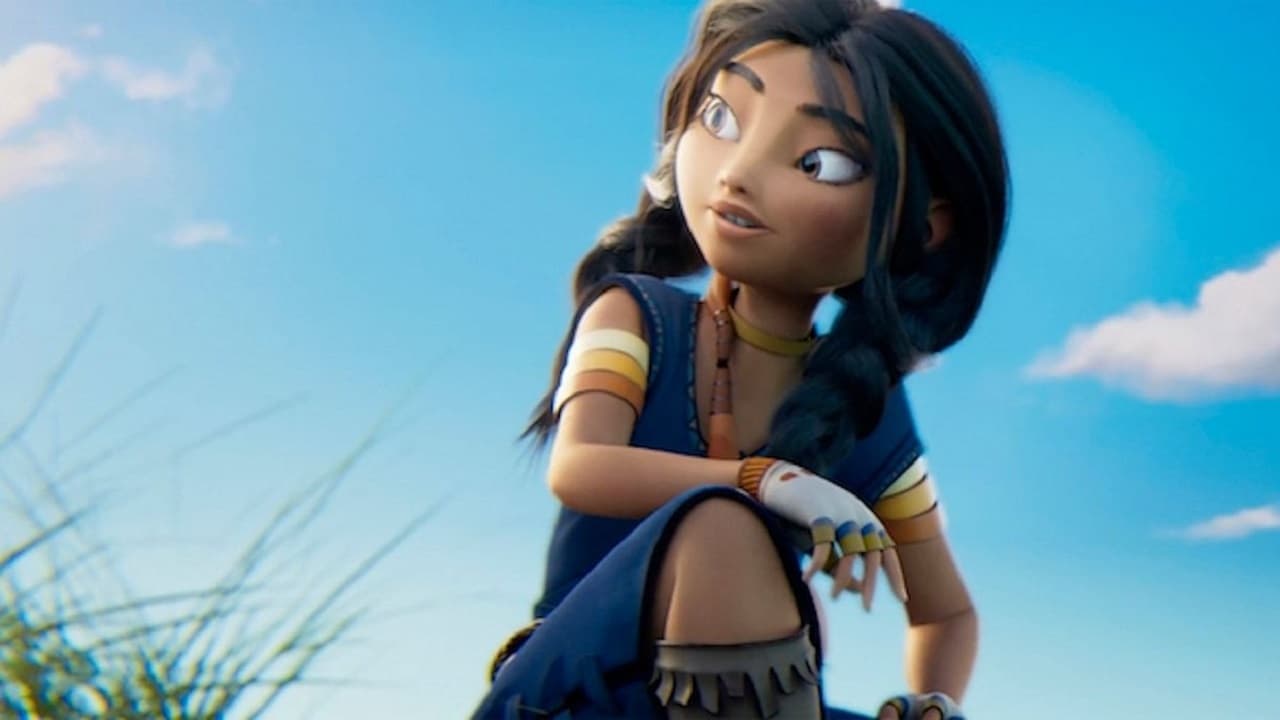
At its heart, Kayara is a story about the Chasquis—the legendary relay runners of the Incan Empire. These weren't just athletes; they were the living nervous system of a civilization. Since the Inca didn’t use a written alphabet in the Western sense, the runners carried quipus (intricate knotted strings) and oral messages. To be a Chasqui was to be the "ink" of the empire. Naomi Serrano voices Kayara with a grounded, breathy determination that avoids the usual "spunky princess" tropes. She doesn't just want to run because it’s fast; she wants to run because the stories of her people are literal weights that need to be carried.
The film grapples with a fascinating philosophical knot: What happens to a culture’s memory when the messengers are restricted by gender? If only men are allowed to run the paths, are we only hearing half of our own history? It’s a sophisticated question for a family film, moving past simple "girl power" slogans into a deeper inquiry about who gets to hold the thread of time. Kayara’s journey isn't just a physical trek; it’s an attempt to prove that her voice is a necessary part of the Incan record.
A David-Sized Budget on a Goliath Peak
In the current era of $200 million Disney behemoths, Kayara is a bit of a financial anomaly. Produced by Tunche Films and B-Water Animation for a relatively modest $8 million, it represents the growing "global South" animation movement. You can see where the money was saved—the character models occasionally have that slightly stiff, "early-2010s" look—but you can also see where the passion was spent. The lighting in the high-altitude sequences is spectacular. There’s a scene involving a golden sunrise over a stone bridge that looks like a painting I’d find in a dusty Cusco gallery.
The screenplay, co-written by Jason Cleveland and Brian Cleveland, manages to sidestep the franchise-fatigue humor that plagues so many modern releases. There are no snarky pop-culture references or wink-at-the-camera jokes here. Instead, it leans into the wonder of the Incan world-building. We see the intricate stone-work of the cities and the ritualistic importance of the missions. Nate Begle, as the companion Martin, provides a necessary levity, but the film remains refreshingly earnest. It’s a contemporary film that feels like a throwback to the era when adventure movies weren't afraid to be slightly mystical and genuinely sincere.
The Struggle for the Spotlight
Despite its visual ambition, Kayara faces the modern curse of the streaming-saturated market. It’s the kind of film that risks being swallowed by the "Recommended for You" algorithm, overshadowed by the latest Pixar sequel or a Netflix-funded powerhouse. This is a shame because the film’s rough edges are actually part of its charm. There is a human friction here—a sense that every frame was a struggle to render on a budget—that makes the "adventure" feel more earned than the polished-to-a-mirror-sheen blockbusters we usually see.
The supporting cast, including Charles Gonzales and Edgar Garcia, helps flesh out a world that feels lived-in and socially complex. The tension between tradition (represented by the older Chasquis) and progress (Kayara’s ambition) is handled with more nuance than I expected. It’s not about burning down the old ways; it’s about expanding them so they don't snap under the pressure of the changing world. The film is a quiet reminder that representation isn't just about the face on the poster—it's about the specific cultural mechanics, like the quipu or the chaski code, being treated with intellectual respect.
Ultimately, Kayara is a testament to the idea that a good story can travel as far as its legs will carry it. It’s a solid, soulful adventure that manages to be both a history lesson and a pulse-pounding race through the clouds. While it lacks the infinite polish of its billion-dollar cousins, it has a heart that beats with the rhythm of the high Andes. If you’re tired of the same three formulas being recycled by the big studios, this Peruvian odyssey is a path worth taking. It’s a small film with big lungs, and it earns every bit of its 81-minute runtime.
Keep Exploring...
-

The King of Kings
2025
-

Ainbo: Spirit of the Amazon
2021
-

Hilda and the Mountain King
2021
-

Trollhunters: Rise of the Titans
2021
-

The Boy, the Mole, the Fox and the Horse
2022
-

Transformers One
2024
-

The Boy and the Beast
2015
-

How to Train Your Dragon: Homecoming
2019
-

Wolfwalkers
2020
-

Tad, the Lost Explorer and the Emerald Tablet
2022
-

Mummies
2023
-

An Egg Rescue
2021
-

Spirit Untamed
2021
-

Chickenhare and the Hamster of Darkness
2022
-

Paws of Fury: The Legend of Hank
2022
-

The Amazing Maurice
2022
-

Mavka: The Forest Song
2023
-

Arco
2025
-

Gabby's Dollhouse: The Movie
2025
-

Raya and the Last Dragon
2021
-

Flow
2024
-

The Summit of the Gods
2021
-

Little Amélie or the Character of Rain
2025
-

Over the Moon
2020