The Fantastic 4: First Steps
"The future was brighter in the sixties."
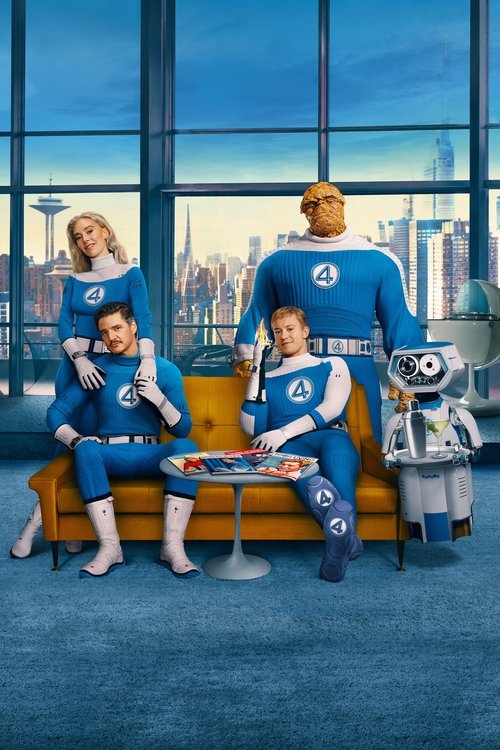
The biggest miracle of The Fantastic 4: First Steps isn't that Pedro Pascal can stretch his limbs like warm taffy or that Ralph Ineson sounds like a tectonic plate having a mid-life crisis. No, the real magic trick is that Marvel finally remembered how to have fun. After a few years where the MCU felt like it was drowning in its own homework, director Matt Shakman has delivered a Technicolor blast of retro-futurism that feels less like a corporate mandate and more like a lost episode of The Twilight Zone directed by someone who actually likes their family.
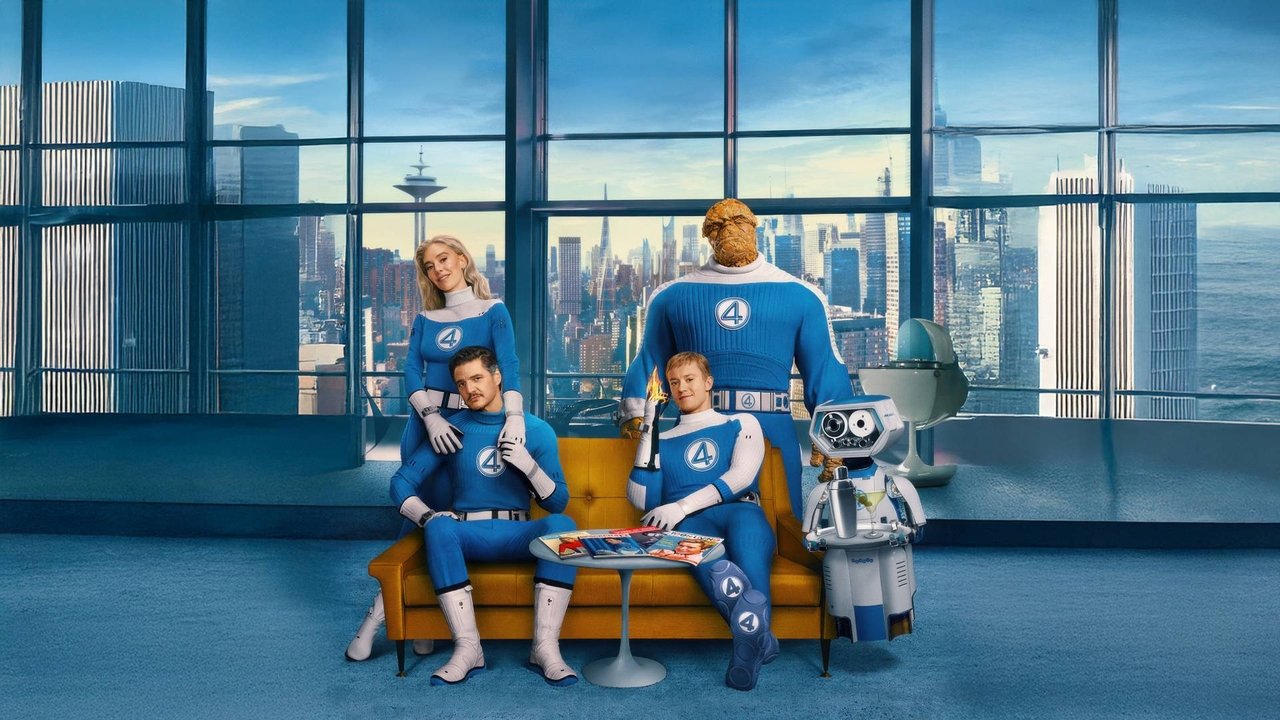
I watched this in a theater where the air conditioning was stuck on "Arctic Blast," and I was huddled under a thin hoodie, clutching a lukewarm cherry cola that tasted suspiciously like window cleaner. Weirdly, that slightly sterilized, chemical sweetness felt entirely appropriate for a film set in a 1960s that never was—a world where the buildings look like sleek percolators and the robots are shaped like friendly trash cans.
A World Built of Chrome and Optimism
The film drops us into an alternate 1960s Manhattan that looks like it was ripped straight off a World’s Fair postcard. It’s vibrant, hopeful, and entirely detached from the "sludge-gray" cinematography that has plagued recent blockbusters. By leaning into this aesthetic, Shakman bypasses the superhero fatigue that has been rotting the genre from the inside out. He isn’t trying to make these characters "gritty" or "grounded." Instead, he embraces the beautiful absurdity of a man who turns into a rock and a teenager who lights himself on fire for a laugh.
Pedro Pascal is the perfect anchor here. As Reed Richards, he manages to sidestep the "emotionless genius" trope, giving us a man whose brain is moving three steps faster than his heart can keep up with. It turns out Reed Richards' graying temples have more character development than most Phase 4 villains. He feels like a weary dad trying to solve an algebra equation while his house is burning down. Opposite him, Vanessa Kirby as Sue Storm provides the actual steel. While the boys are bickering or panicking, Kirby plays Sue with a sharp, observant grace that suggests she’s the only one actually looking at the horizon.
The Weight of a Cosmic Hunger

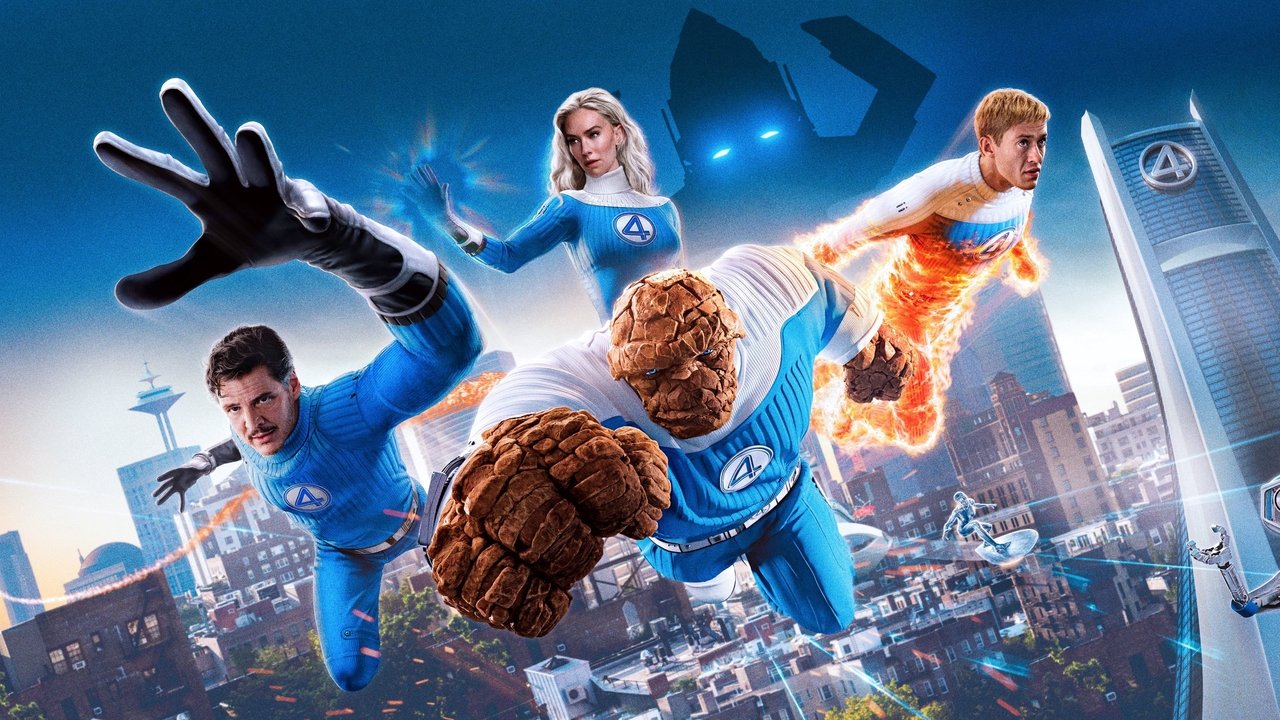
When it comes to the action, First Steps understands that scale matters. We’ve seen enough "sky beams" to last several lifetimes, but Ralph Ineson’s Galactus feels genuinely terrifying because of the sheer physical wrongness of his presence. He doesn’t just arrive; he looms. The cinematography by Jess Hall uses wide-angle lenses to make the Earth feel fragile, like a Christmas ornament about to be crushed by a god.
The action choreography isn't just a flurry of punches. It’s a creative use of four very different power sets working in tandem. There’s a sequence involving a collapsing bridge where Reed’s stretching is used as a literal safety net while Joseph Quinn’s Johnny Storm provides the momentum. It’s synchronized, it’s clear, and it’s a relief to see action that doesn't rely on "shaky-cam" to hide the CGI. Speaking of which, Ebon Moss-Bachrach as Ben Grimm (The Thing) is a triumph of performance capture. You can see the soulful, hangdog exhaustion in his eyes, even through the orange crags of his skin. He’s the heart of the film, reminding us that being "fantastic" often comes with a terrible physical cost.
Finding the Family in the Fantastic
What makes this a potential cult classic in the making—and a standout in the modern franchise landscape—is its refusal to be cynical. In an era where every movie feels like a setup for three other movies, First Steps is remarkably self-contained. It cares about the internal dynamics of this specific family. Apparently, Michael Giacchino wrote the film’s soaring, brassy score before a single frame was shot, and you can feel that rhythmic DNA in every scene. The music drives the film forward with a "Jet Age" energy that is infectious.

The production was famously kept under wraps, with social media melting down over every casting rumor. Julia Garner was a controversial pick for Shalla-Bal (a version of the Silver Surfer), but she brings an ethereal, detached coldness to the role that is haunting. The Silver Surfer isn't just a cosmic herald here; she’s a vibe-check for the entire planet. Her presence shifts the movie from a lighthearted romp into something more existential and urgent.
Despite the $200 million budget, the film feels intimate. It’s a story about a family realizing that the only thing more dangerous than a planet-eating god is the fear of losing each other. It’s a movie that asks us to look up at the stars again with wonder rather than dread. In 2025, that feels like the most revolutionary thing a superhero movie could do.
Marvel’s First Family finally got the homecoming they deserved by going back to a future that never happened. It’s a stylish, heartfelt, and visually stunning reminder that the MCU can still surprise us when it stops worrying about "the timeline" and starts worrying about the characters. If this is the first step for the new era of Marvel, I’m actually excited to see where the next one leads. Pack your bags; the 60s are looking better than ever.

Keep Exploring...
-
Black Widow
2021
-
Godzilla vs. Kong
2021
-

Kingdom of the Planet of the Apes
2024
-

Thunderbolts*
2025
-
The Creator
2023
-
Underwater
2020
-
Eternals
2021
-
The Matrix Resurrections
2021
-
The Tomorrow War
2021
-
Blue Beetle
2023
-

Transformers: Rise of the Beasts
2023
-
Superman
2025
-
Greenland
2020
-
Love and Monsters
2020
-

Furiosa: A Mad Max Saga
2024
-
Star Trek Beyond
2016
-
Teenage Mutant Ninja Turtles: Out of the Shadows
2016
-
Power Rangers
2017
-
Thor: Ragnarok
2017
-
Solo: A Star Wars Story
2018