Until Dawn
"The night doesn't end until you survive."

There was a time, not so long ago, when seeing the "PlayStation Productions" logo at the start of a film felt like a warning shot—a signal to brace for a clunky, soulless translation of a medium that didn’t want to be a movie in the first place. But we are living in the post-Last of Us and Fallout era, where the "video game curse" has been buried in a shallow grave. David F. Sandberg, returning to his horror roots after a detour into the DC Universe, seems to understand that the secret to a good adaptation isn't just mimicking the source material; it’s capturing the anxiety of playing it.
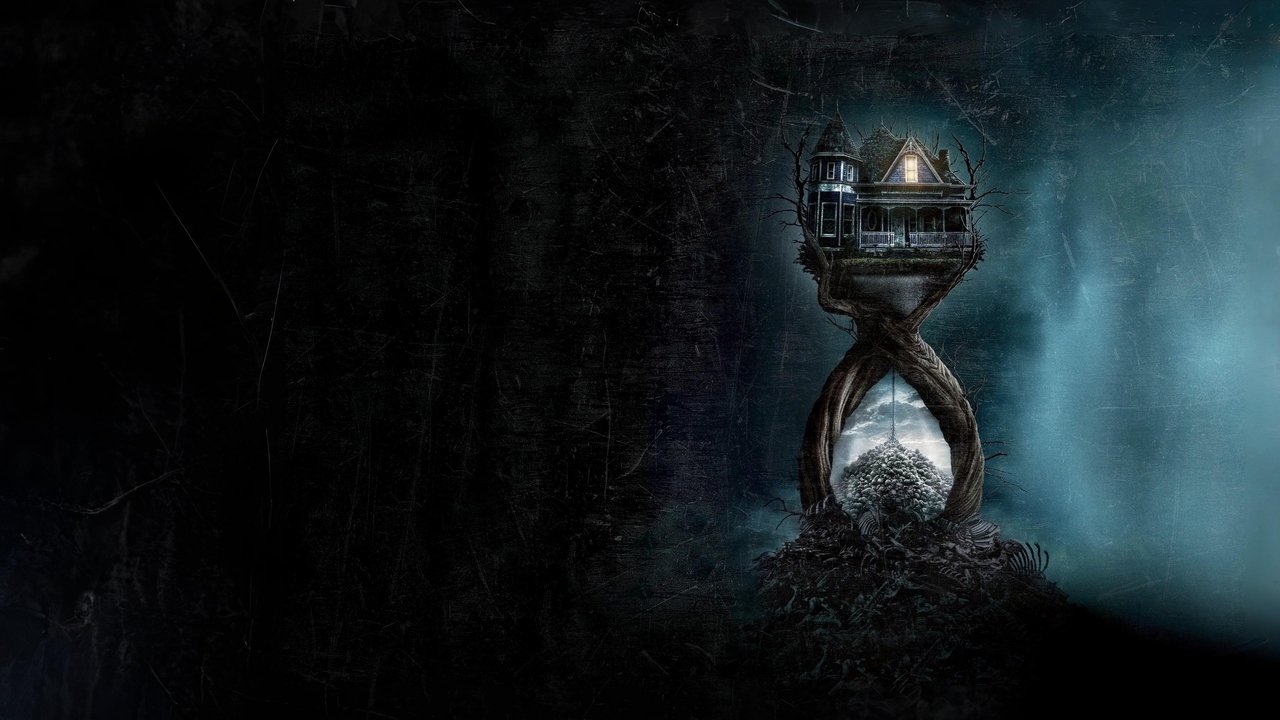
In the case of Until Dawn (2025), that anxiety takes the form of a 103-minute endurance test. For the uninitiated, the original 2015 game was a "Butterfly Effect" simulator where every choice could lead to a character’s gruesome demise. The film, however, pivots. Screenwriters Gary Dauberman and Blair Butler have introduced a "time loop" mechanic that feels less like a narrative cheat and more like a meta-commentary on the way gamers play: you die, you learn, you respawn, you try not to scream.
A Slasher with a Glitch in the Matrix
The plot follows Clover, played with a convincing blend of grief and grit by Ella Rubin, who returns to the Blackwood Mountain region a year after her sister Melanie (Maia Mitchell) vanished. She’s joined by the usual suspects of the slasher subgenre: the charming Max (Michael Cimino), the jock Abe (Belmont Cameli), and the obligatory wild card Nina (Odessa A’zion). They end up trapped in an abandoned visitor center that looks like it hasn't seen a janitor since the Reagan administration—all flickering fluorescent lights and heavy shadows.
When the masked killer arrives, the movie initially feels like a standard-issue "teenagers in peril" flick. But then, the first death happens, and the world resets. It’s a risky move. Usually, the finality of death is the only thing that gives a slasher its stakes. Here, the horror shifts from "Will they die?" to "How many times can they watch each other die before their minds snap?" David F. Sandberg excels in these claustrophobic spaces. He uses the architecture of the visitor center to create a sense of geographical dread; I found myself constantly checking the background of shots for movement, much like I did when I was playing the game on my couch a decade ago.
Stormare and the Art of the Creepy Cameo

The real MVP of the production, however, is Peter Stormare. Reprising his role as Dr. Alan Hill from the game, he appears in fragmented, surreal sequences that feel like they’re bleeding through the film's reality. Stormare has always been an actor who lives on the edge of the frame, bringing a peculiar, unsettling energy to everything he touches. In Until Dawn, he acts as a sort of ghoulish narrator, judging the characters (and, by extension, the audience) for their failures. His presence anchors the film in its weird, psychological roots, preventing it from becoming just another body-count movie.
The rest of the cast holds their own, particularly Odessa A’zion, who seems to be carving out a niche as the go-to actor for "final girls with an attitude." My only gripe is that the "time loop" structure occasionally saps the momentum. By the third time we saw the group enter the main lobby, it started to feel less like a nightmare and more like a particularly stressful shift at a Denny’s. There’s a fine line between rhythmic repetition and narrative treading water, and the film occasionally splashes into the latter.
The Budget-to-Scream Ratio
One of the most refreshing things about Until Dawn is its restraint. In an era where "franchise" usually means a $200 million price tag and enough CGI to make your eyes bleed, this film was made for a lean $15 million. It’s a "Post-Pandemic" success story—a mid-budget horror movie that knows exactly what it is. It doesn't try to save the world; it just tries to survive the night. The practical effects are crunchy and mean-spirited, and the masked killer’s design is simple enough to be iconic without feeling over-designed.

I watched this in a theater where the air conditioning was broken, and I was sitting next to a teenager who spent the first twenty minutes trying to open a bag of sun-dried tomatoes with his teeth. The heat and the weird smell of dried fruit actually added to the experience—it felt grimy, uncomfortable, and urgent. That’s the magic of contemporary horror; it’s one of the few genres that still feels like a collective, physical experience in a world where everything else is being pushed toward the sterile isolation of a streaming app.
Until Dawn (2025) is a clever, if occasionally repetitive, addition to the modern horror canon. It manages to satisfy the "Easter egg" hunger of fans while providing enough of a twist to keep the general audience on their toes. It doesn't quite reach the heights of the 2015 game’s narrative complexity, but as a lean, mean slasher, it hits more often than it misses. If you’re looking for a film that treats the concept of "Game Over" as a starting point rather than an end, this is well worth the hike into the woods. Just remember: when the clock resets, try to run in a different direction this time.


Keep Exploring...
-
Annabelle: Creation
2017
-
Polaroid
2019
-
Color Out of Space
2020
-
Gretel & Hansel
2020
-
Hubie Halloween
2020
-
The Empty Man
2020
-
Watcher
2022
-
Thanksgiving
2023
-
Immaculate
2024
-
The Watchers
2024
-

The Lodge
2020
-
Antlers
2021
-
Fear Street: 1666
2021
-

The Deep House
2021
-
Mr. Harrigan's Phone
2022
-
Lights Out
2016
-

The Invitation
2022
-
Regression
2015
-
A Classic Horror Story
2021
-
The Night House
2021