Things Unspoken
"The hardest thing to write is the truth."
There is a specific kind of silence that only exists between two people who have run out of things to say, and Gabriele Muccino captures it with the precision of a diamond cutter. In the opening frames of Things Unspoken, we see Stefano Accorsi as Carlo, staring at a cursor that blinks with the rhythmic mockery of a heart monitor. He’s a celebrated writer who has forgotten how to breathe life into words, living in a Roman apartment so tastefully decorated it feels like a high-end mausoleum. Beside him is Carolina Crescentini as Elisa, a journalist who spends her days dissecting global crises while her own marriage undergoes a quiet, bloodless coup.
I watched this on a Tuesday afternoon while my neighbor was obsessively power-washing their driveway, and the relentless, mechanical hum outside actually provided a strangely perfect soundtrack to the internal grinding of Carlo’s mid-life crisis.
The Roman Malaise
Muccino has always been the poet laureate of the Italian shouting match, but here he leans into something far more dangerous: the polite conversation. The first act is a masterclass in domestic claustrophobia. Stefano Accorsi (whom you might remember from Muccino’s breakout The Last Kiss) plays Carlo with a frayed, nervous energy that suggests a man constantly looking for an exit sign in his own living room.
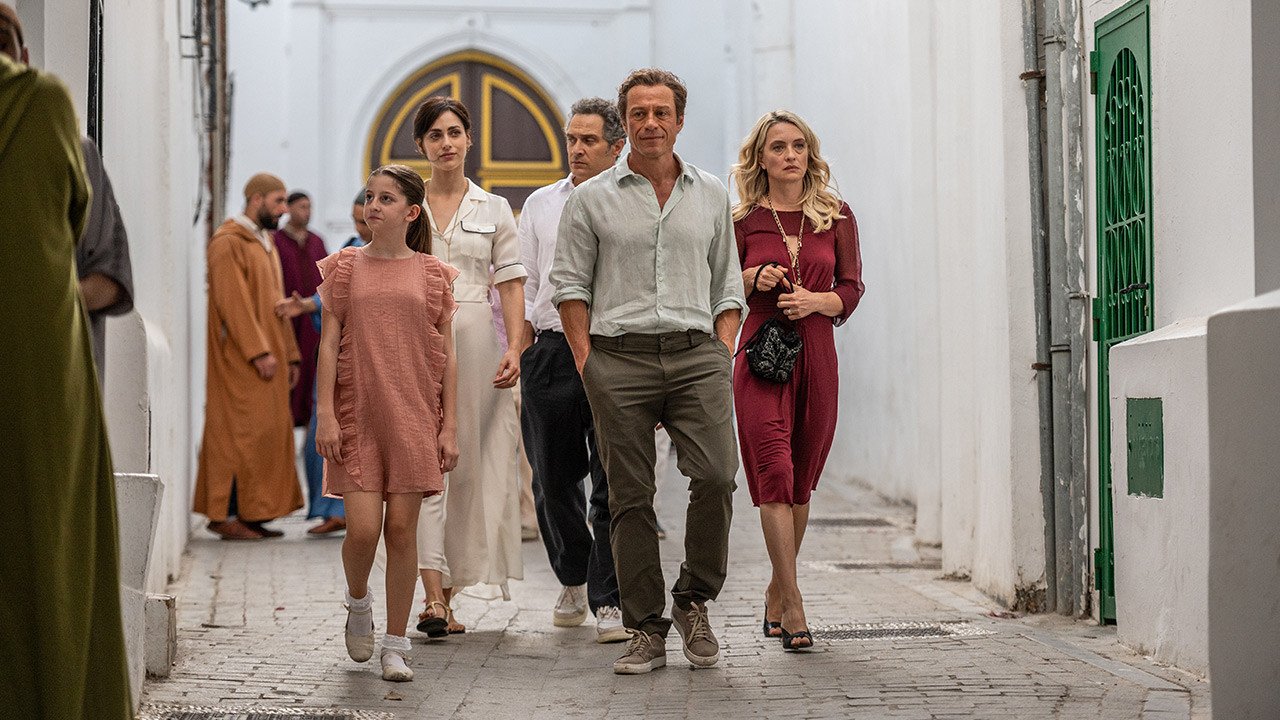
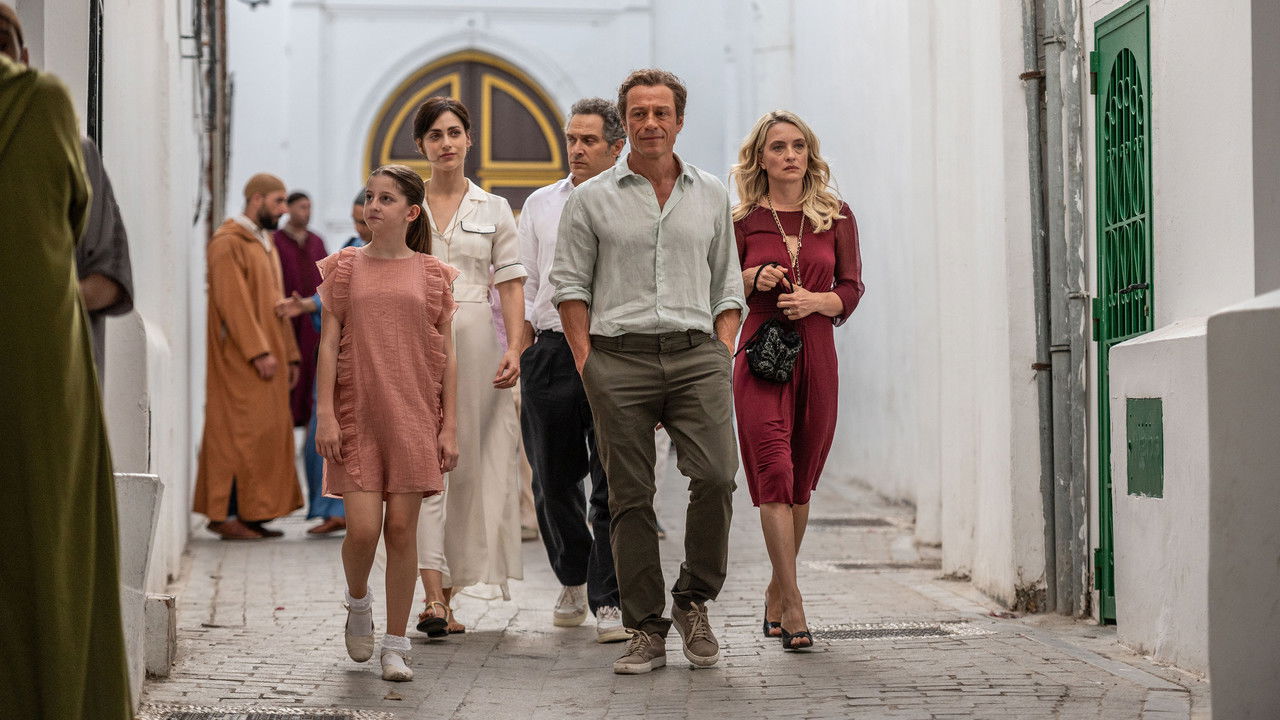
When the couple decides to trek to Morocco with their longtime friends Anna (Miriam Leone) and Paolo (Claudio Santamaria), it feels less like a vacation and more like a desperate attempt to outrun their own shadows. They bring along Vittoria (Beatrice Savignani), their thirteen-year-old daughter, who acts as the film’s moral compass simply by being the only person in the room who isn't performing a role. Beatrice Savignani is the real find here; her Vittoria is "eccentric" in the way only brilliant, lonely children are, watching her parents unravel with a gaze that is entirely too perceptive.
Dust, Secrets, and Mint Tea
Once the action shifts to Morocco, the film sheds its cold, Roman blues for a palette of scorching ochre and gold. This is where the screenplay, co-written by Muccino and the legendary Delia Ephron (You've Got Mail), really starts to twist the knife. The change in scenery doesn't provide the "new energy" the characters hoped for; instead, the heat acts as a catalyst for long-simmering resentments.
Miriam Leone and Claudio Santamaria provide the perfect foil to the lead couple. While Carlo and Elisa are drowning in intellectualized misery, Anna and Paolo represent a more visceral, messy kind of struggle. There’s a scene involving a dinner with a local guide, Hassan (Ahmed Boulane), where the cultural disconnect becomes a mirror for the characters' personal failures. Ahmed Boulane brings a grounded, quiet dignity that makes the neurotic bickering of the Italians look like a spoiled child crying over a broken toy. It’s uncomfortable, it’s cringey, and it’s exactly what the movie needs to move beyond "rich people problems."
The Shadow of the Streamer
It is genuinely bizarre to me that Things Unspoken isn't a bigger part of the cultural conversation. Released in the middle of the 2026 "Summer of Franchises," it was effectively buried by its own studio. Lotus Production and RAI Cinema aimed for a prestigious theatrical rollout, but a last-minute shift in distribution saw it dumped onto a secondary streaming platform with almost zero marketing. It’s a casualty of the "content" era—a thoughtful, adult drama that didn't have enough explosions or multiverses to satisfy the algorithm.
Apparently, the production was just as fraught as the on-screen marriage. Turns out, the filming in Morocco was plagued by a record-breaking heatwave that saw temperatures hit 48°C (118°F), leading to several members of the crew fainting during the pivotal desert trek sequence. You can actually see the genuine exhaustion on Carolina Crescentini’s face in the final act; that’s not just acting, that’s a woman who is physically and emotionally "done."
Additionally, there’s a persistent rumor in Italian cinema circles that a much longer, three-hour "Director’s Cut" exists, which leans further into the political journalism subplot of Elisa’s character. As it stands, the 114-minute version we have is lean and mean, but you can feel the ghost of those deleted scenes in the way some of the supporting arcs resolve.
Things Unspoken is a film that demands you sit still, which is a big ask in 2026. It doesn’t offer easy redemption or a catchy soundtrack, but it does offer a hauntingly accurate portrait of how we use travel to avoid the people we’ve become. The chemistry between Accorsi and Crescentini is a slow-burn fire that eventually consumes everything in its path. If you can find where this is currently buried in the streaming graveyard, it’s a journey that pays off in ways you won't expect. It’s a reminder that sometimes the most terrifying thing you can encounter in the desert is a mirror.
Keep Exploring...
-

Fathers and Daughters
2015
-

Italian Race
2016
-

The Return
2024
-

Baggio: The Divine Ponytail
2021
-

Freaks Out
2021
-

Superheroes
2021
-

The Catholic School
2021
-

The Hand of God
2021
-

The Inner Cage
2021
-

The King of Laughter
2021
-

Three Floors
2021
-

Yara
2021
-

Dry
2022
-

L'immensità
2022
-

Lord of the Ants
2022
-

Strangeness
2022
-

The Hummingbird
2022
-

The Invisible Thread
2022
-

The Perfect Dinner
2022
-

Ferrari
2023
-

Io Capitano
2023
-

Kidnapped
2023
-

La Chimera
2023
-

Still Time
2023